Category: Posts page

  • September 2026

    September 2026

    Fungi, Heritage, and Hidden Histories

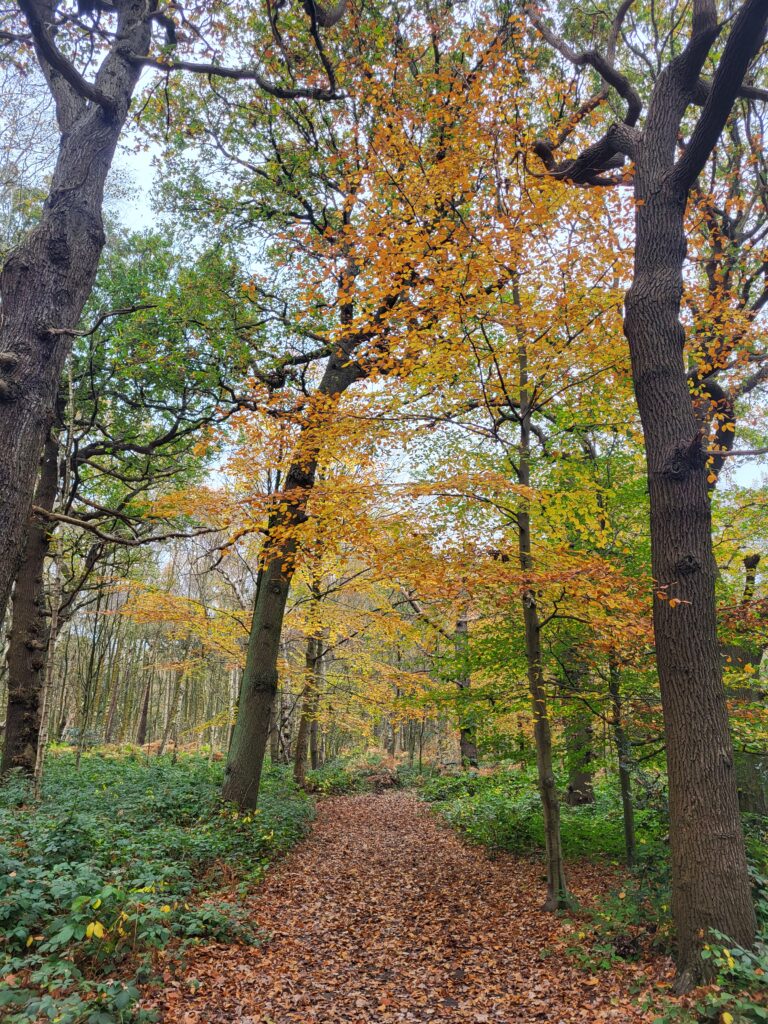
    This month has brought a lot more rain, and although the leaves are beginning to turn into their vibrant autumnal colours, creating vast palettes of oranges and reds before carpeting the ground, grasses have returned to their green state. Plants are beginning to look vibrant again, rather than drought-ridden and brown. Putting on one last display before succumbing to the season upon us.

    These conditions have allowed one of my favourite kingdoms to begin fruiting: the Fungi Kingdom. Bracket fungi, mushrooms, and slime moulds are beginning to emerge in a wonderful variety of shapes, colours, and forms.

    Many people are afraid of fungi, and I can understand why. They are full of unknown mysteries, so much so that they have become deeply ingrained in folklore and fairy tales. Often representing death and decay, fungi can seem mysterious and even sinister. But what many people miss is the amount of life they provide.

    They transform the remains of plants, insects, mammals, and almost every other form of life into nutrients, food sources, habitats, and healthy soil. They are fundamental to the cycles of life and death, and yet they remain so often misunderstood.

    If you can’t tell, I realllly love fungi!

    Mycelial Magic

    Hidden underground for most of the year, mycelial networks work their magic beneath our feet, waiting for the right conditions to produce fruiting bodies. The fungi we see above ground are, in fact, just the reproductive part of a much larger organism.

    Mycelial networks can span enormous distances beneath the ground. The largest known fungal organism in the world is in Oregon, associated with the Humongous Fungus (yes, that’s its real common name!). It covers an estimated 2,385 acres and is thought to be between 2,400 and 8,650 years old.
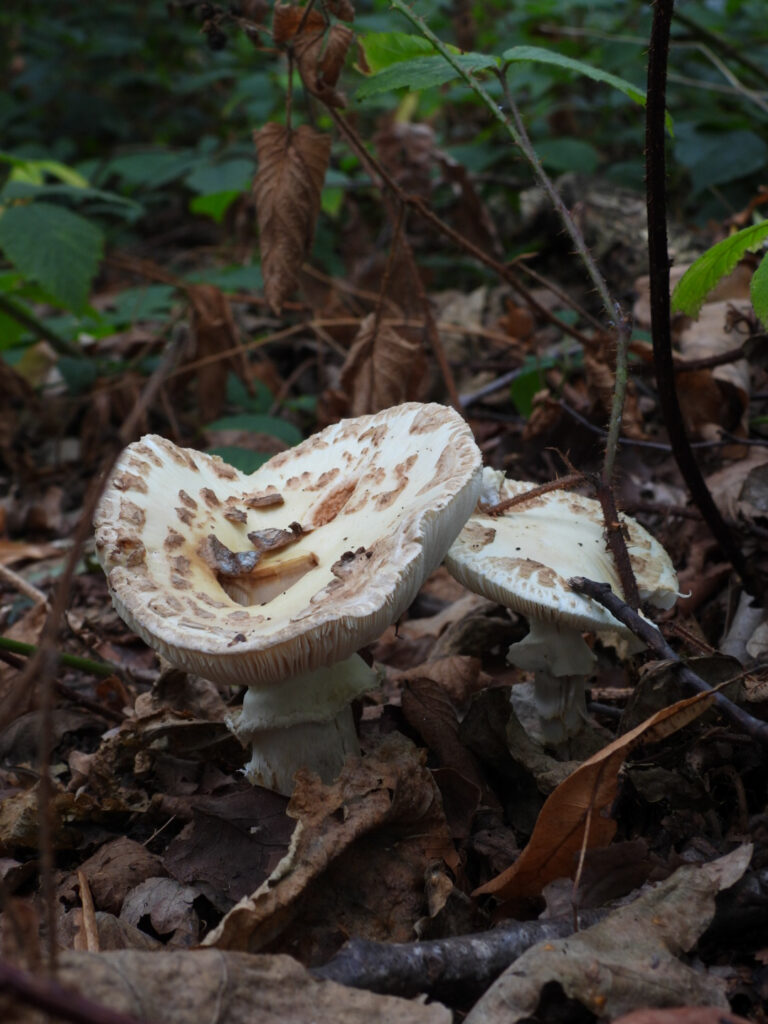
    False death cap (Amanita citrina) in Stockton's Wood, Speke Hall
    False death cap (Amanita citrina) in Stockton’s Wood, Speke Hall

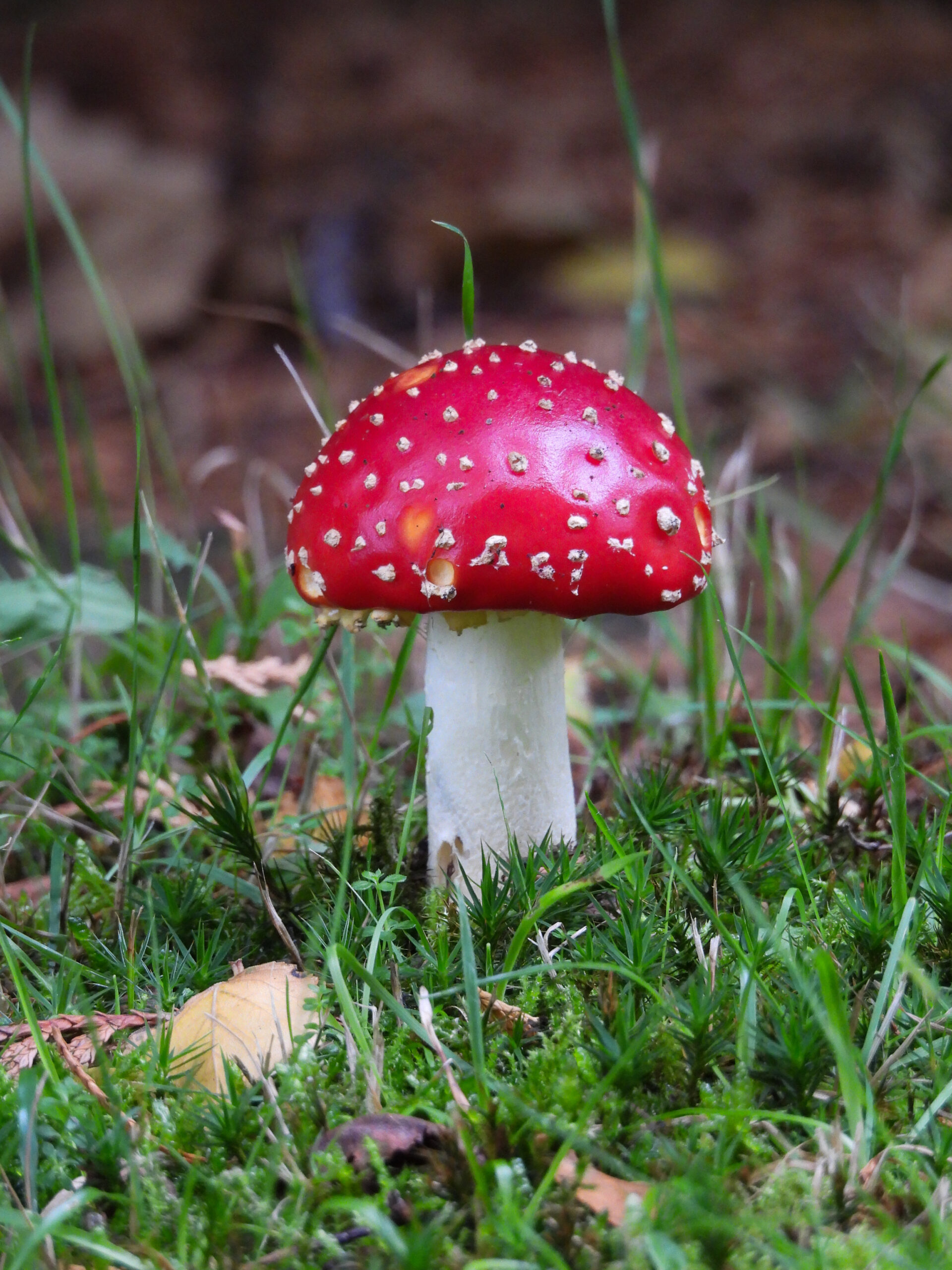
    But perhaps one of the most fascinating things about fungi is the relationships they form with the plants around them. Amanita muscaria, alongside many other fungal species, forms a symbiotic relationship with trees such as oak, birch, and conifers.

    The words ‘symbiotic’ or ‘mutualistic’ describe relationships between species where both organisms benefit from the connection.

    Known as mycorrhizal relationships, these partnerships connect fungal mycelium with the roots of trees, effectively extending their reach into the soil. The fine threads of mycelium can access water and nutrients from areas beyond the reach of tree roots, while the fungi receive sugars produced by the tree through photosynthesis in return.

    It is a remarkable partnership, hidden almost entirely from view. Beneath the woodland floor, an intricate network of fungi is constantly interacting with the plants around it, helping to move nutrients and supporting the wider ecosystem.

    The ‘Wood Wide Web’ is a widespread and often-used analogy for the mycorrhizal connections found throughout many established woodlands.

    Fungi are also indicator species that are often overlooked. Their presence can tell us something about the conditions of a habitat, including soil health and ecological continuity. Some species are particularly associated with ancient woodlands, grasslands, and other long-established, undisturbed habitats.

    So when we see fungi fruiting amongst ancient trees, we aren’t simply seeing a mushroom growing from the ground. We may be seeing another small piece of the history of that habitat.

    It’s easy to look at a mushroom and see a small organism growing from the soil. But what we are actually seeing is just the tip of something much larger.

    Habitats and Heritage

    Are they really separate?

    Thinking about fungi as ancient habitat indicators over the last couple of weeks has got me thinking about how many of our protected historical sites and culturally important spaces, preserved for their heritage, also retain some of the most valuable habitats across the country.

    I often visit a local churchyard, All Saints’ Church, Childwall. It is the oldest church in Liverpool, and the churchyard itself seems to tell that story.

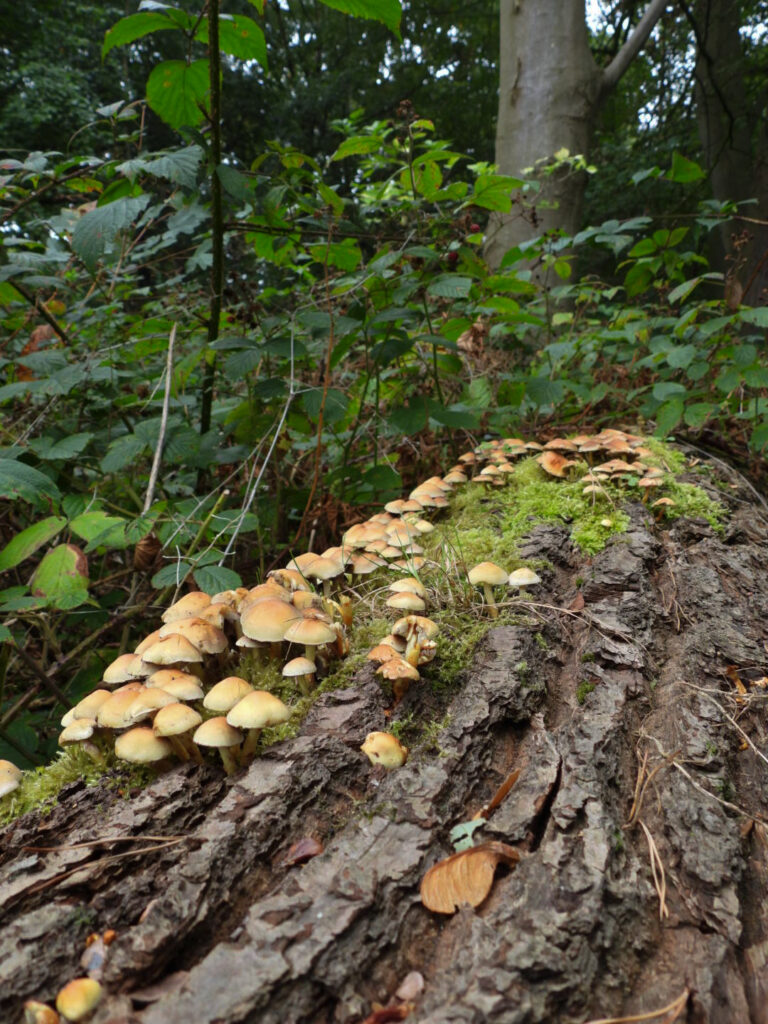
    On one side, where the oldest graves stand amongst large oaks and yews, there is always the most beautiful array of fungi: brittlegills, milkcaps, boletes, blushers, and fly agarics.

    The other side is more open, with bountiful displays of sheep’s sorrel and fox-and-cubs, mossy floors, wax caps, and other signs of its ancient history skirting the church.

    And it isn’t just churchyards. Speke Hall and Norton Priory are two more examples of places where history and nature have remained intertwined. Both sit within urban areas, yet they hold little oases of natural continuity, preserving habitats and landscapes that might otherwise have been lost to development.

    Perhaps this is one of the things I love most about heritage sites: they don’t just preserve our human history. Sometimes, they preserve a little of nature’s history too.
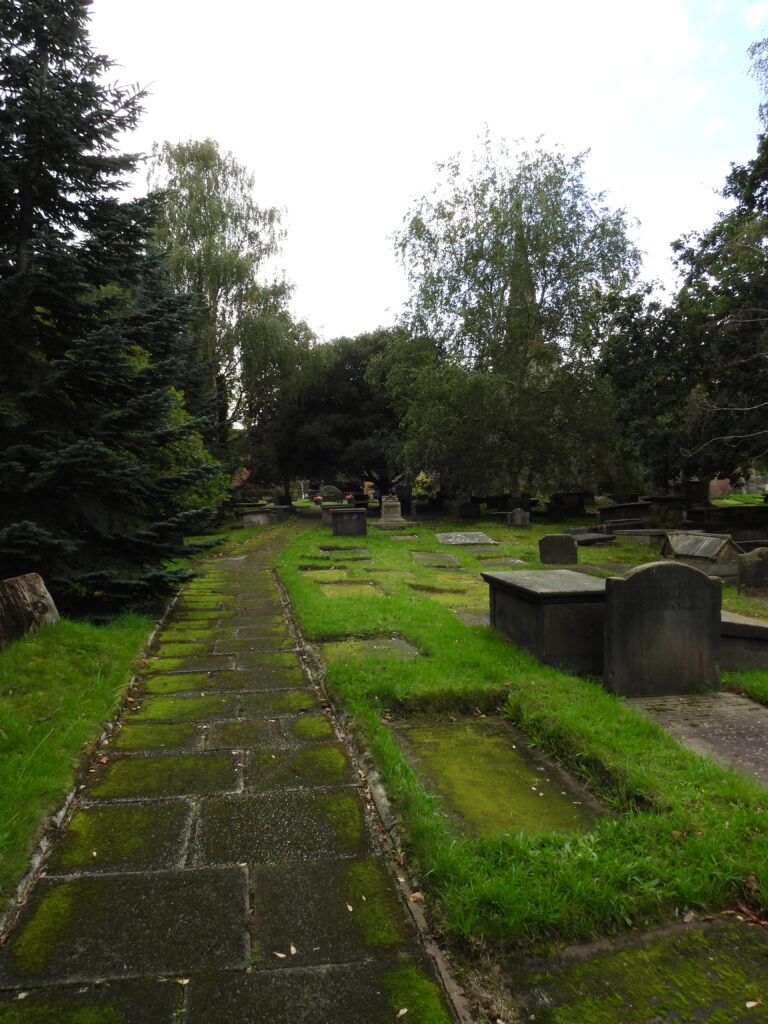
    All Saints’ Church, Childwall
    Stockton's Wood, Speke Hall
    Stockton’s Wood, Speke Hall

    Because these sites have been so meticulously protected, the habitats encompassing them have also been allowed to coexist, often for generations, although they are frequently treated as less important.

    I think this needs to change. So often, these habitats tell a story far older than the ‘human’ heritage we tend to recognise and protect. Ancient trees, fungi, mosses, grasslands, soils, and the species that live amongst them are all part of the history of a place.

    Perhaps we shouldn’t think of nature and heritage as separate things at all. The landscape itself is part of the story.
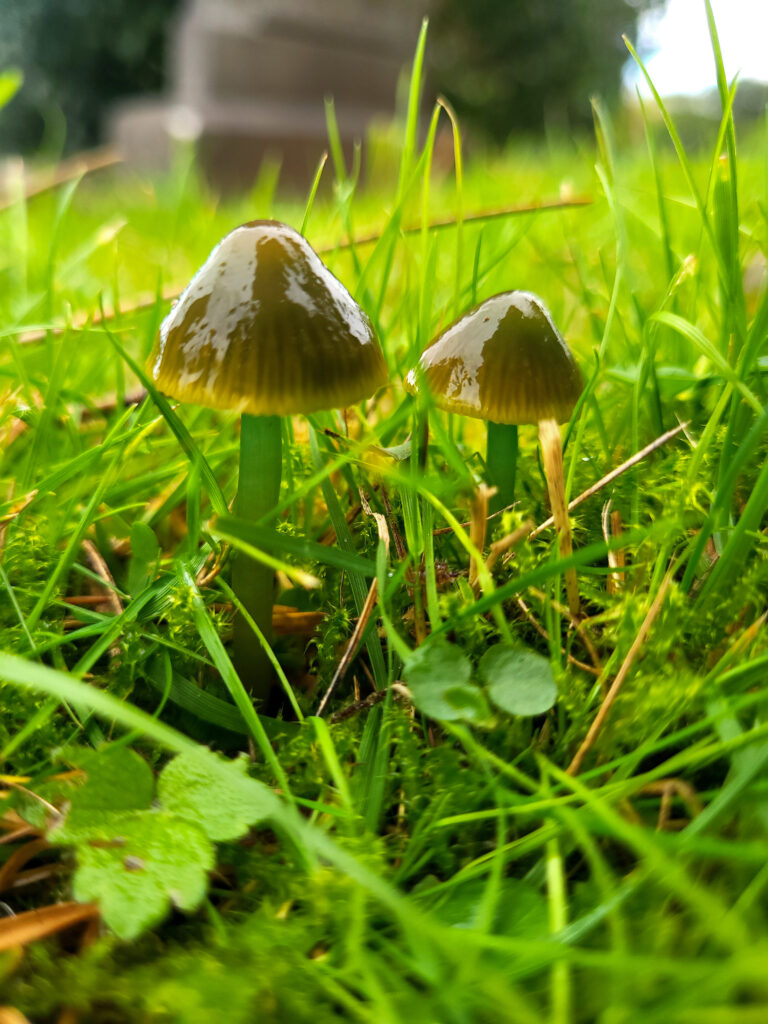
    Parrot waxcap (Gliophorus psittacinus) seen last year at Biobanks fungi walk at Allerton Cemetery
    Parrot Waxcap (Gliophorus psittacinus) seen last year on a fungi walk organised by Merseyside Biobank.

    Plantlife’s Waxcap Watch

    Waxcaps are an indicator of rare, species-rich grassland and by tracking where waxcaps and other grassland fungi flourish, we can identify and safeguard the fragile remnants of ancient meadows for future generations.

    Beyond serving as vibrant havens for hundreds of native wildflowers, these ancient grasslands play a vital role in combating climate change. In fact, biodiverse, species-rich grasslands are capable of storing up to a third more carbon than monoculture or low-diversity areas.

    Waxcap Watch: Survey Britain’s Grassland Fungi | Plantlife

    September Highlights

    Site of the month – The Nature Reserve @Calderstones Park
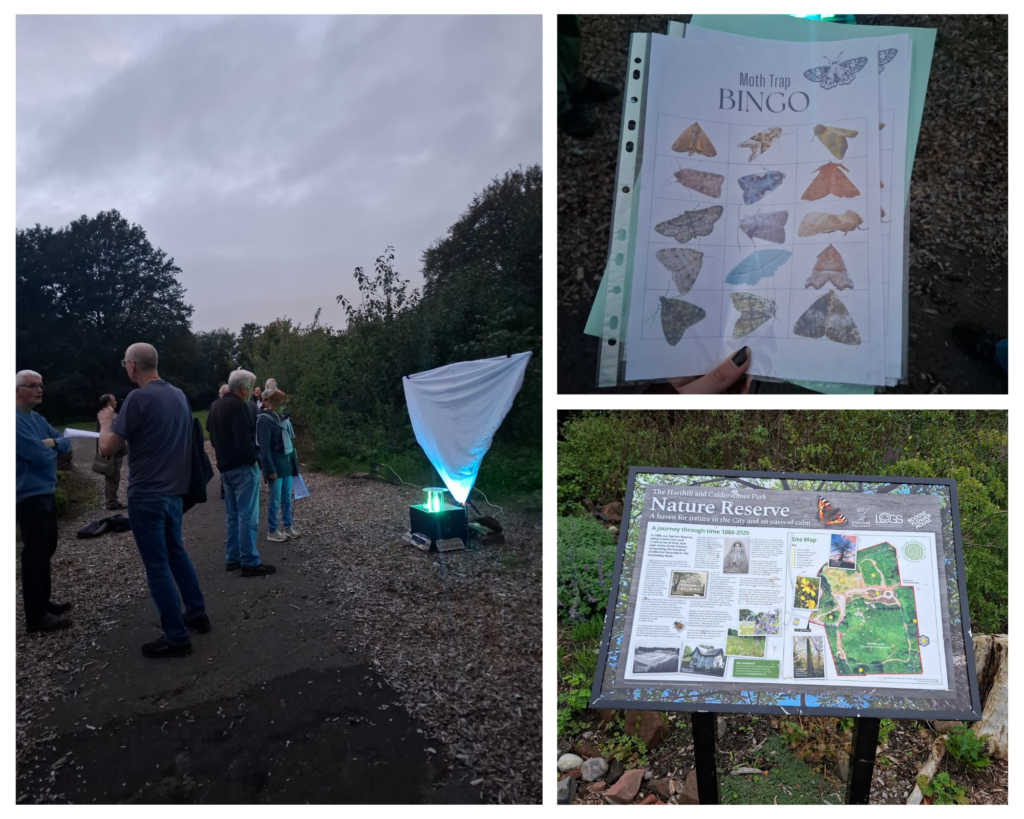
    On the cusp of the autumn equinox on the 22nd of September, I reached a personal milestone by facilitating my first-ever event at the reserve. I could not have asked for a more welcoming group of participants. Together, we set up a moth trap and observation sheet, diving into a fascinating discussion about the ecological importance of moths, their incredible diversity, and the vital role that wildlife recording plays in conservation.

    The reserve sits at the edge of Calderstones Park and has been brought to life after local people fought to protect the site, which had almost become a development site. I visited earlier in September and was given an informative tour by Stephen Ralph, a very dedicated committee member.

    The four-acre site was once entirely concrete, before volunteers began transforming it into a flourishing natural space in 2019.

    Since then, they have planted native trees, created a thriving meadow, built a wildlife pond, and so much more.

    This site beautifully highlights the power of community, the vital fight to protect our greenspaces, and the incredible, lasting impact we can achieve when we stand together.

    The reserve is open on Tuesdays while the volunteers are on-site. I highly recommend visiting to learn more about the group’s incredible work or even getting involved by joining the team as a volunteer.

    A big thanks to all the volunteers for giving me the opportunity to host a moth night!

    Species Highlights
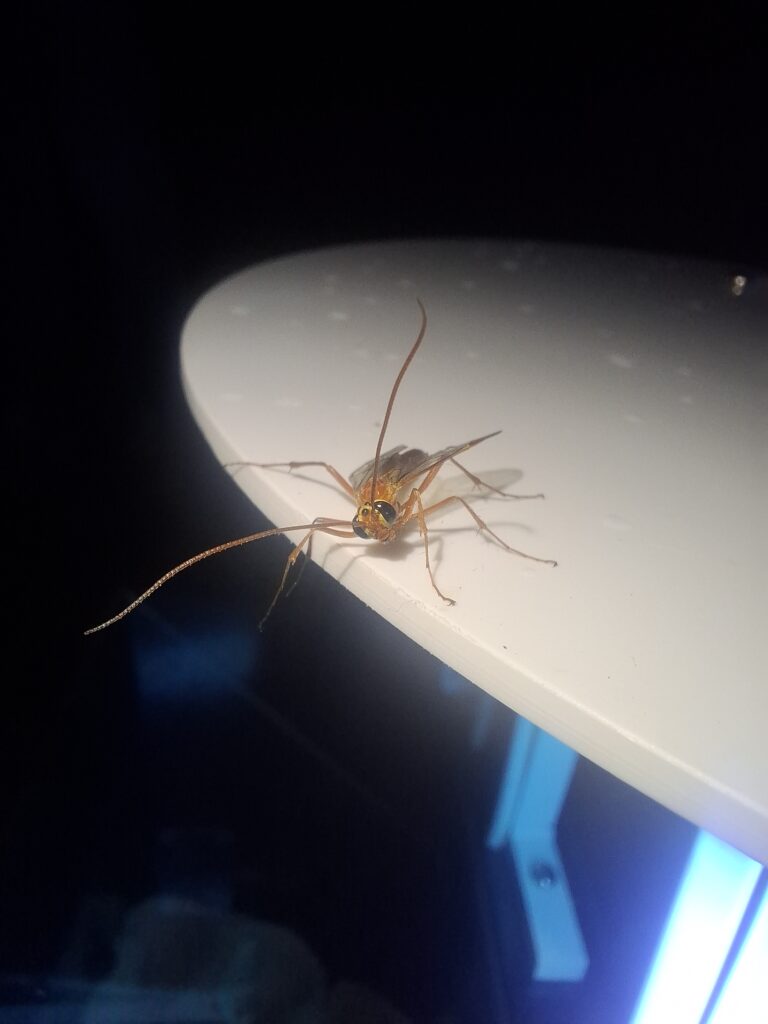
    Parasitoid Wasp (still trying to figure out which species)

    This interesting fellow really enjoyed the moth-trapping event at Calderstones Nature Reserve. So much so, he basically stole the show.

    Parasitoid wasps lay their eggs in or on other insects. Their hosts can include caterpillars, beetles, aphids, and even spiders.

    Although this sounds quite gruesome, parasitoid wasps play an essential role in regulating insect populations and are widely used in biological pest control.
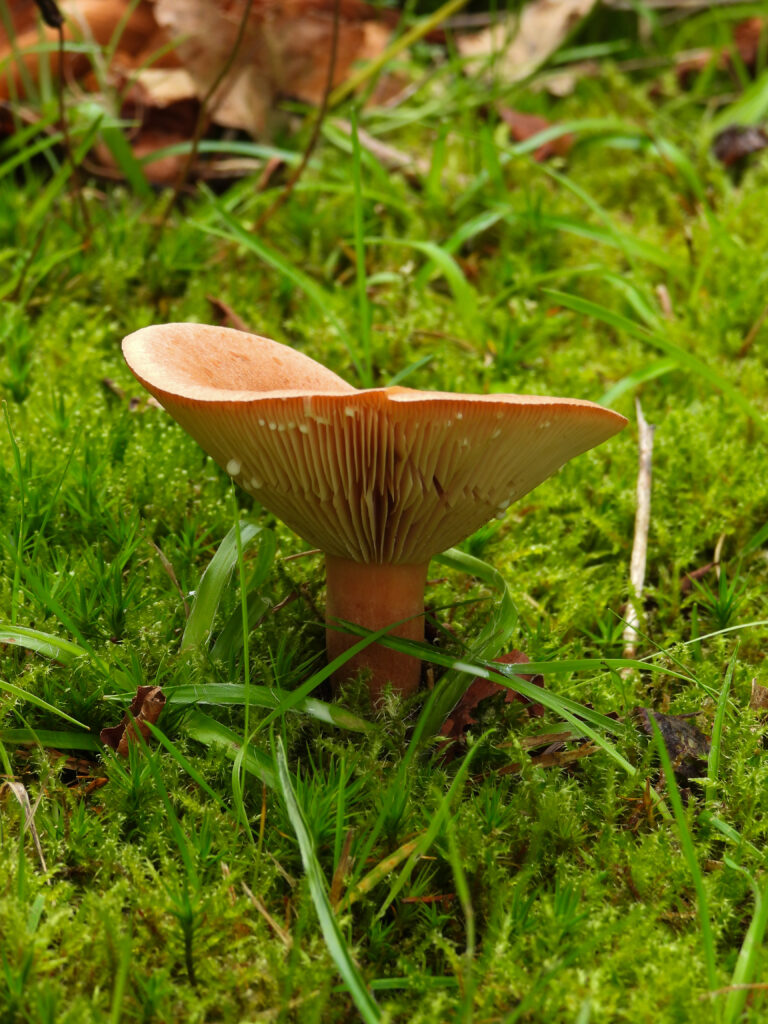
    Milkcap (Lactarius spp.) Potentially Rufous Milkcap.

    Milkcaps secrete a kind of ‘milk’ or latex from their gills when damaged. Depending on the species, this can be mild, spicy, acrid, or even sweet. The ‘milk’ can be white, orange, or sometimes green.

    I have no idea which Milkcap species this is. Many experienced mycologists will taste a tiny amount of the latex as part of the identification process, as its flavour can be a useful characteristic when distinguishing between species.

    I’m not yet brave enough to do so.

    Thank you for reading until the end! I hope you enjoyed Septembers blog which largely covered one of my favourite natural wonders, fungi. And my thoughts on the often overlooked connection between heritage sites and habitats.
  • August 2026

    August 2026

    Moths, Meadows, and Musings

    This month, I have immersed myself in the small wonders that make spending time in nature so special and healing. As someone working to build a career in nature and ecology, it’s easy to get caught up in the technical details instead of simply enjoying the pure joy of observation.


    While recording in my local area of Netherley, we spent time near where Mill Brook merges with Netherley Brook. As we watched the birds from the bridge above, a sudden flash of blue caught our eye – my very first sighting of a Kingfisher! It was an unexpected and beautiful reminder of how much we can miss when we don’t take the time to pause and truly observe.

    This was unexpected, given the brook has numerous sewage outflows, both legal and illegal (the latter have been reported and will hopefully be addressed in time). It truly demonstrates the resilience of nature.

    During a sunset walk around Kindling Farm to plan an upcoming bat walk in early September, we set out with bat detectors to find the perfect route. While patiently waiting for the bats to emerge, a distant silhouette swooping across the fields caught our attention: a barn owl embarking on a night of hunting across the ancient agricultural landscape. It stole the show, gliding gracefully through the evening sky, past the waxing gibbous moon, as dusk gave way to night.


    From watching wildlife to helping habitats recover…


    Native wildflower meadows

    In recent years, meadows have become a central focus of my learning. At the close of 2024, I had the privilege of meeting the remarkable Josh Styles, who has successfully transformed local species-poor grasslands into thriving meadows teeming with wildflowers such as orchids, yellow rattle, bird’s-foot trefoil, knapweed, ragged robin, Dyer’s greenweed, and a rich diversity of other plants.

    Since meeting Josh, I have become immersed in the magic of these habitats and begun to share his passion for restoring them.

    I began helping with the management of these grasslands and gained a good understanding of what makes a healthy grassland habitat.

    Josh created and manages these areas using a traditional cut-and-collect method, typical of hay meadow management. Simply put, this involves cutting the grasslands at the end of the summer season and removing the clippings to prevent them from decomposing and returning nutrients to the soil. Historically, the removal of vegetation by grazing animals would have played an important role in maintaining open grassland habitats, but with traditional management becoming increasingly uncommon, Josh carries out the task with his trusty scythe. I follow behind him with a rake, gathering the hay and moving it away from the meadow.

    Josh also takes great care in sourcing native wildflower seed from local reserves and conservation sites. Species such as yellow rattle and devil’s-bit scabious have been sourced from places including Martin Mere, helping to increase the botanical diversity of these restored grasslands while retaining a strong local connection to the species being introduced.

    This process is vital for reducing excess nutrients in the soil, allowing native meadow species to thrive in nutrient-poor environments. Over the last century, increased fertiliser use has changed soil composition, harming our native wildflower meadows. As a result, 97% of these habitats have been lost, with what remains now occupying less than 1% of the UK.

    If you want to learn more, check out Plantlife’s Good Meadow Guide.

    Species that depend on these habitats have declined as these areas have degraded. One notable example that I had the pleasure of studying as part of one of my modules at university is the Turtle Dove, which has undergone a dramatic decline in the UK alongside the loss of suitable feeding habitat. Turtle Doves rely heavily on the seeds of wildflowers and other plants for food, making species-rich meadows and other seed-rich habitats an important source of food for these declining birds. As these habitats disappear, so too does an important source of food for many species.

    The regenerated grasslands in Netherley have become a vital hub for local wildlife. These meadows support a diverse range of specialist pollinators, provide abundant food for birds, and serve as hunting grounds for birds of prey. Even the stacks of green hay create essential winter habitats for small mammals like voles and hedgehogs.

    I have also designed investigations for my degree comparing pollinator diversity between species-poor and species-rich grasslands in the area. The results were clear: the species-rich meadows supported significantly higher numbers and a greater variety of pollinator species.

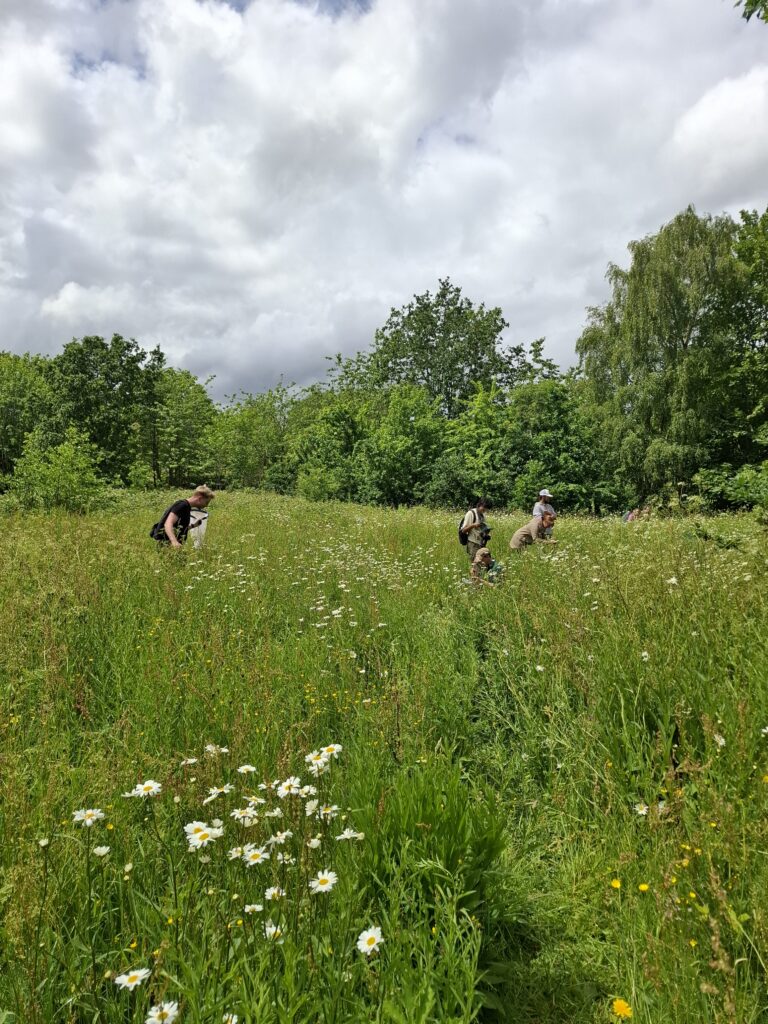
    Another significant benefit of these areas in Netherley has been for us humans and community building. This year, during the City Nature Challenge we held an event with Biobank, our main focus was recording observations in the meadows due to their incredible biodiversity. Other events included a meadow walk led by Josh, followed by a successful bioblitz in the grasslands.

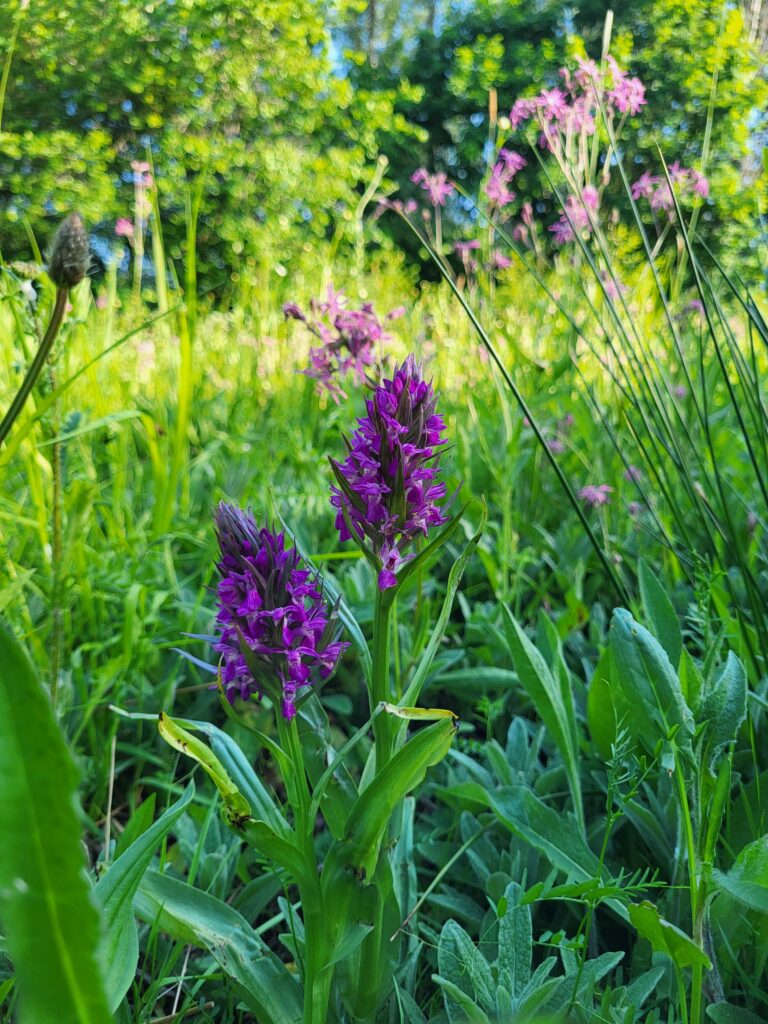
    Southern marsh orchids (Dactylorhiza praetermissa)
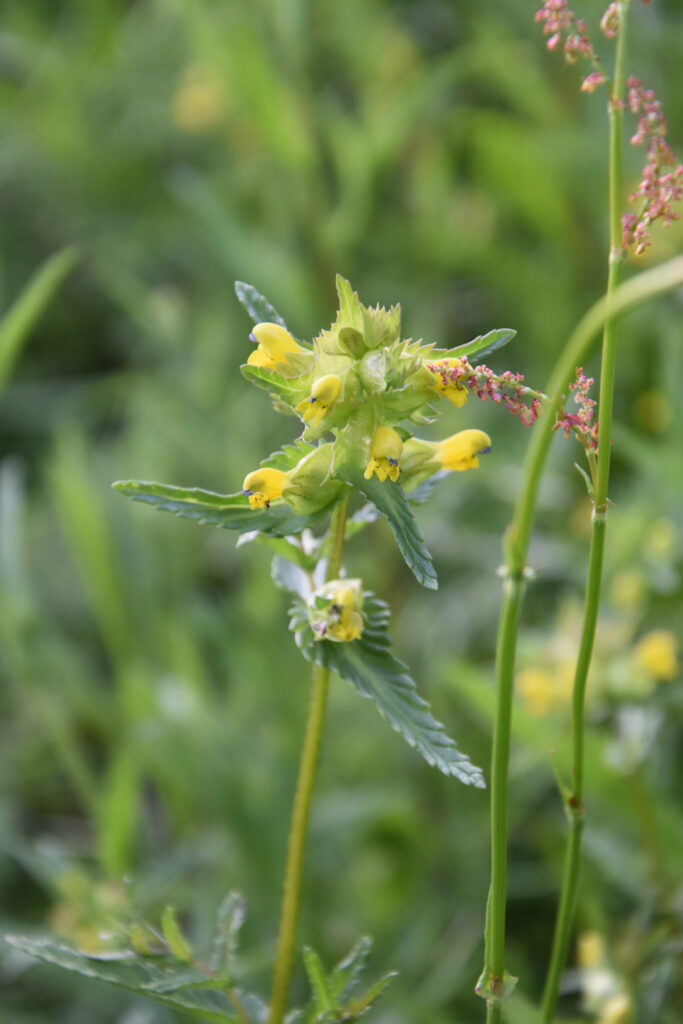
    Yellow rattle (Rhinanthus minor)
    This semi-parasitic wildflower is also known as the ‘meadow maker’. This is due to how it parasitises grasses, attaching to their roots and drawing nutrients and water from them. By weakening the grasses, yellow rattle reduces their dominance and allows other wildflowers the space and light they need to thrive.

    Standing in one of Josh’s restored meadows in full flower, it’s hard to believe these fields were species-poor grassland just a few years ago. That transformation, from green desert to something buzzing with life – is why this work matters. And it starts with a scythe, a rake, and the patience to let the land recover.

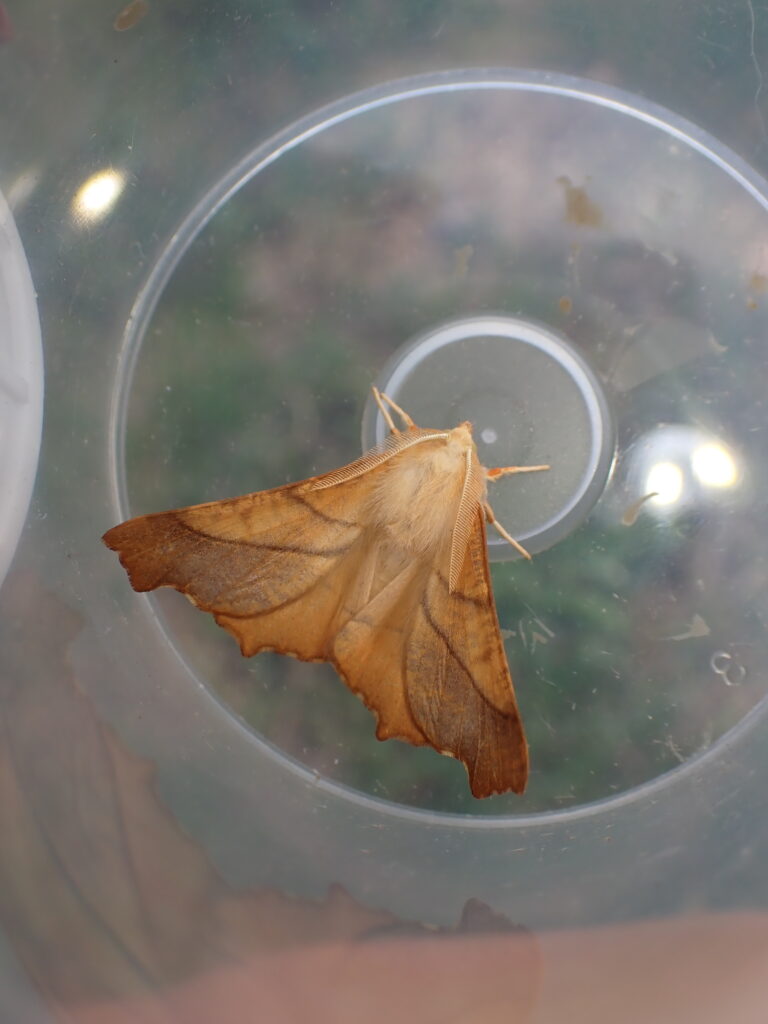
    Dusky Thorn (Ennomos fuscantaria)
    A beautiful moth trap find from this week.

    Moth trapping

    In May, I was given the opportunity to borrow a moth trap from Butterfly Conservation for this year’s season, helping to contribute to local biological records.

    It has been one of the most fascinating experiences I’ve had this year, especially as moth trapping was completely new to me. Moths are often the overlooked side of Lepidoptera, frequently dismissed as dull or uninteresting, and many people seem to have a genuine disdain for them.

    It’s unfortunate that moths are so often overlooked. While butterflies are widely admired for their beauty, moths are their close relatives and just as fascinating in their own right, and actually far more diverse. Most species are nocturnal, meaning that much of this incredible diversity goes unnoticed.

    Many people underestimate the incredible diversity of these creatures and the remarkable beauty of various species, from the delicate swallow-tailed moth to the vibrant pink and green elephant hawk-moth, and the strikingly patterned eyed hawk-moth.

    The more I’ve learned about them, the more I’ve realised just how much beauty is hidden away after dark. And anyone who has spent time with me knows I do love a good wildlife spotting adventure at night, it pairs extremely well with my nocturnal self.

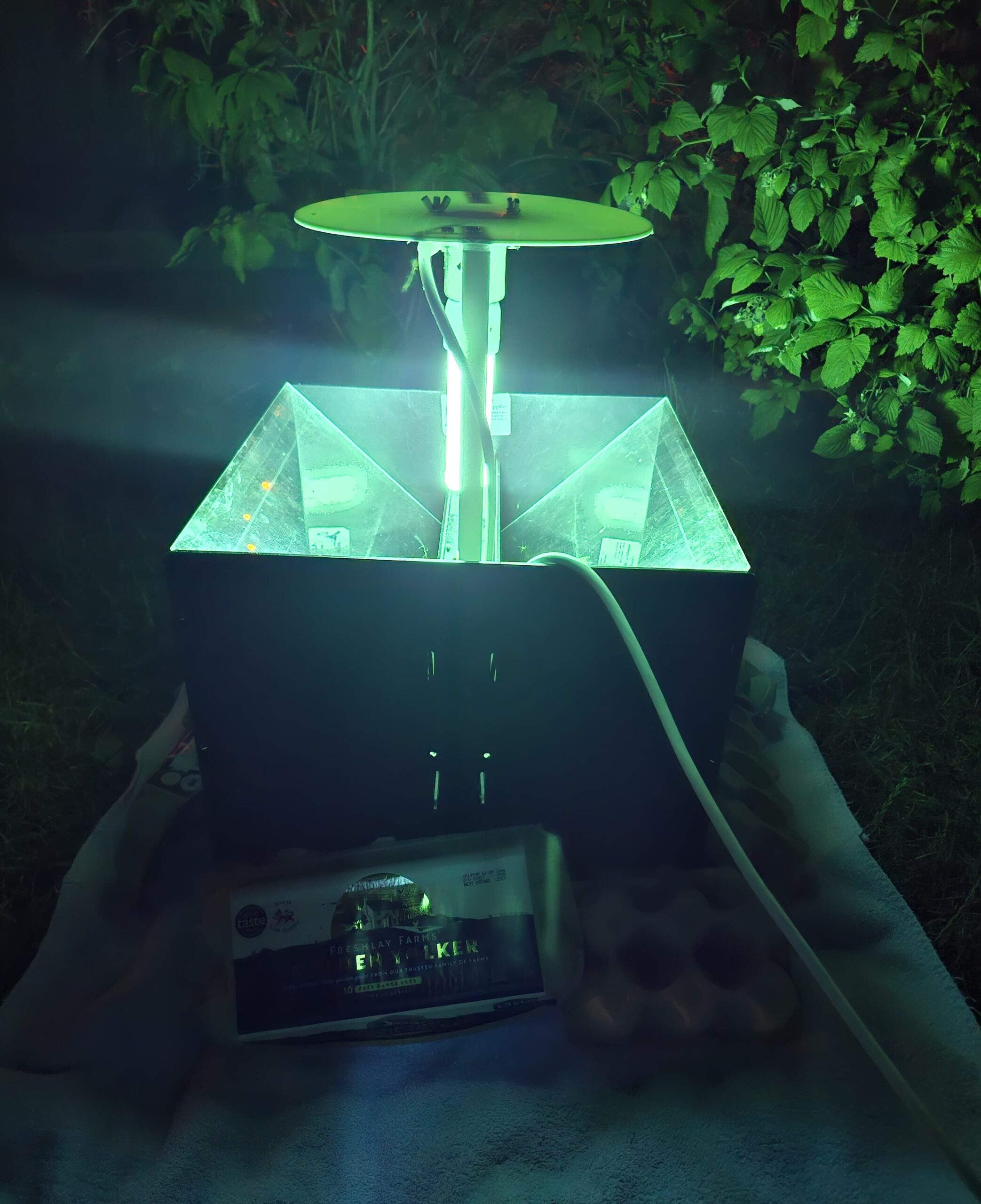
    If you are interested in learning more about moths, I suggest attending some local moth trapping events. Or, getting a trap for yourself! They can be bought or if you’re feeling creative, it’s very possible to make your own with just a bucket, funnel, a UV light, and some egg boxes!

    Here are a couple of useful links –

    UKMoths | Guide to the moths of Great Britain and Ireland

    National Moth Recording Scheme | UKMoths

    How to make your own moth trap | Butterfly Conservation

    This months highlights

    Site of the month – Norton Priory

    This month, I finally got to visit Norton Priory, and it certainly didn’t disappoint.

    If, like me, you’re interested in both history and nature, I highly recommend exploring not only the museum but also the beautiful grounds and walled garden.

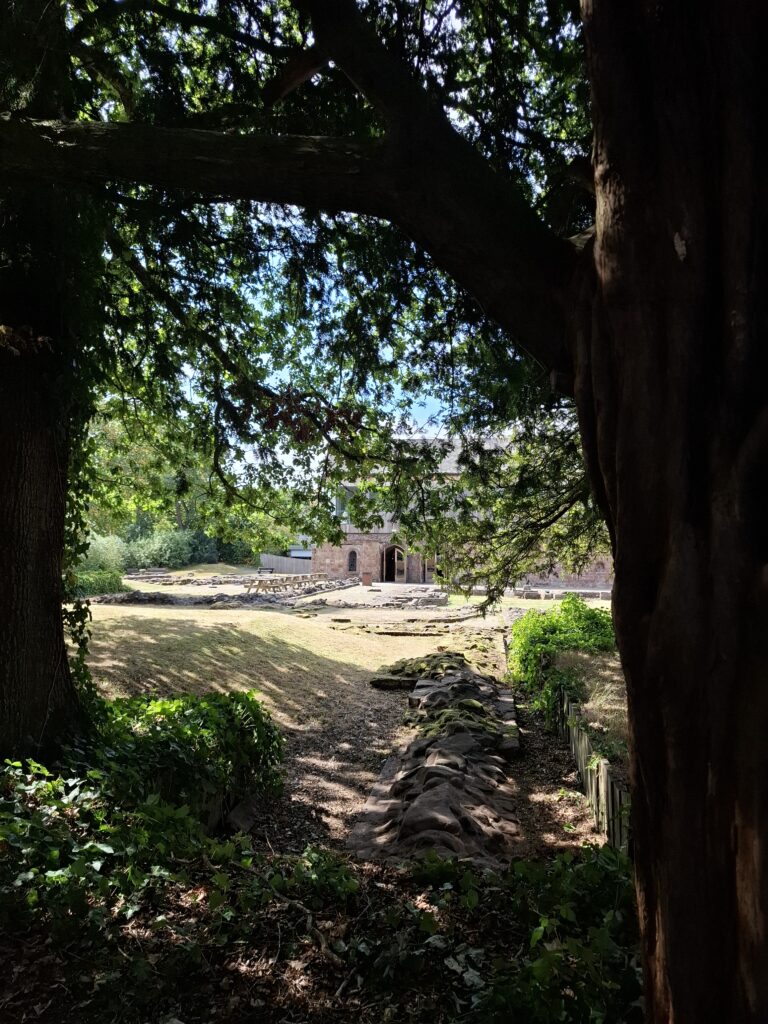
    I have a real passion for continuity when it comes to nature. I’m often most awestruck by landscapes that have managed to remain preserved throughout hundreds of years, carrying traces of the generations that came before us. With this site once being home to a medieval church, and comprising the remains of an abbey complex dating from the 12th to the 16th centuries, Norton Priory has this in bucket loads.

    Generations of yew trees hang over the excavated burial grounds, with chicken of the woods fungus growing from their trunks. Veteran oak trees can be found throughout the woodland as you make your way towards the walled garden.

    If you have an interest in insects, I highly recommend a visit to the walled garden. It was teeming with bees, wasps, hornets, butterflies, and so much more. I could have sat for hours just watching them buzz across the gardens.

    Have a look at the website to learn more, or book on to one of their nature events –

    Norton Priory Museum | Garden | Medieval Buildings Cheshire

    Events | Norton Priory Museum Trust Ltd

    Species of the month –

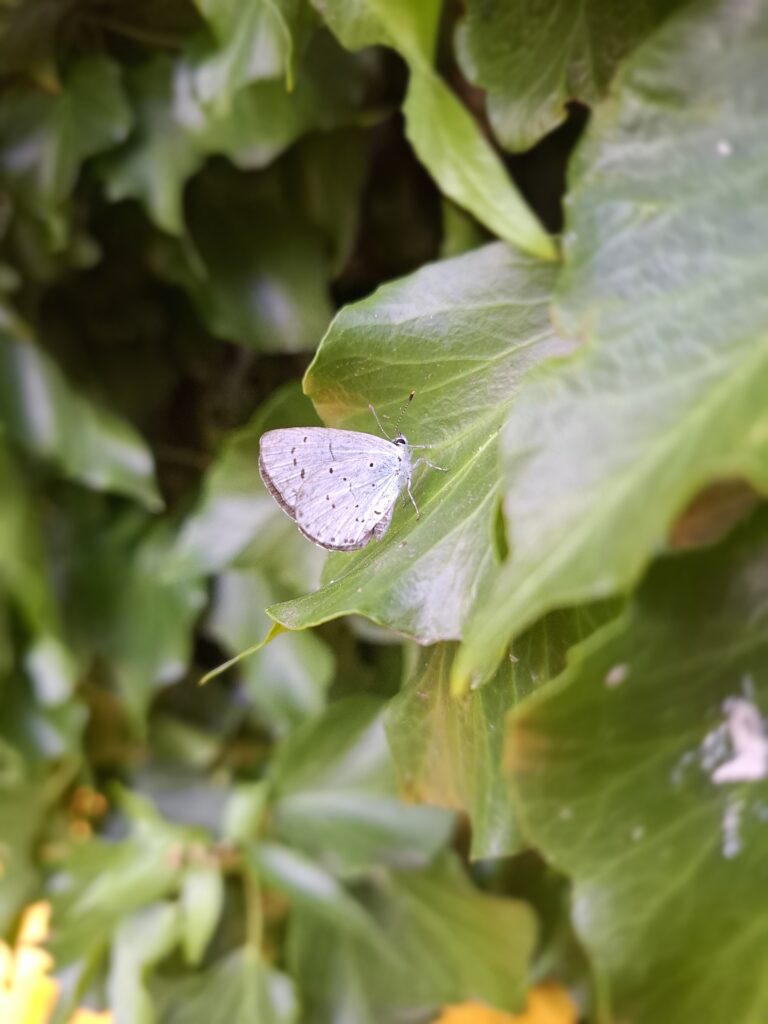
    Holly Blue Butterfly (Celastrina argiolus)

    This tiny but stunning silvery-blue butterfly most often uses holly as its host plant, so I was particularly interested to watch this one laying eggs on the English ivy flower buds in my garden.

    It turns out that in late summer, when holly is no longer suitable for the final brood of the year, holly blues will also use English ivy as a host plant. The caterpillars that hatch from these eggs feed on the ivy’s flowers before eventually pupating.

    They then overwinter as pupae, hidden amongst leaf litter or in overgrown areas. After undergoing metamorphosis, they emerge the following spring as the first generation of a new year.

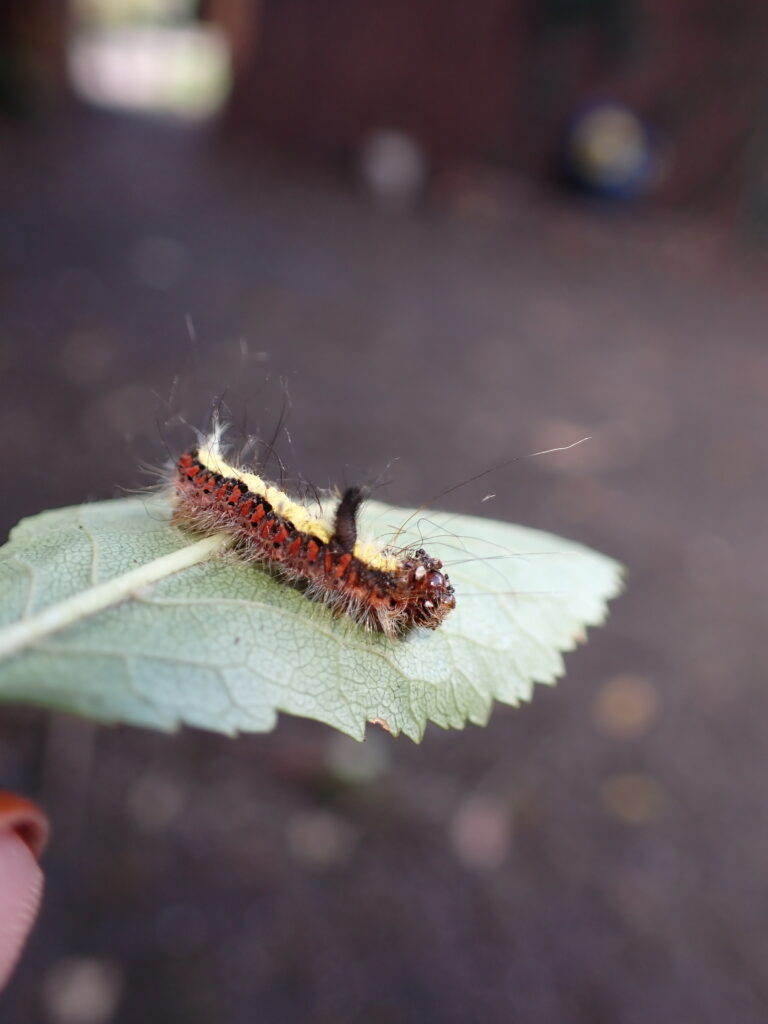
    Grey Dagger Moth caterpillar (Acronicta psi)

    This is another garden find. I spotted this interesting caterpillar wriggling across the leaf litter and had to take a closer look.

    The caterpillars spend the summer feeding on a range of deciduous trees and shrubs before seeking out a sheltered spot to pupate. Finding this one making its way through my leaf litter may therefore have been a glimpse of the next stage of its life cycle.

    After a quick photoshoot, I placed it back exactly where I found it so it could continue on its way.

    This month’s blog is quite a lengthy one, and to be honest, I had to hold myself back from writing even more! So, if you’ve made it this far, thank you so much for reading, as always. I hope you found it both entertaining and insightful.

  • July 2026

    July 2026

    Plants, ponderings, and pathways

    This month has been exceptionally hot, and many of our wild spaces have suffered as a result. The prolonged dry weather has had a significant impact on habitats, particularly grasslands, woodlands and wetlands. Water sources have dried up, leaving many birds, mammals, and insects struggling to find drinking water, sometimes with devastating consequences. Although temperatures have started to cool slightly, more hot weather is forecast over the coming weeks, so I encourage anyone who can to leave shallow dishes of water outside in gardens or green spaces.

    I firmly believe that nature is usually best left to regulate itself, but during periods of extreme weather we have an opportunity to provide simple intervention that can make a real difference.

    –

    I wrapped up June by volunteering at Kindling Farm’s Citizen Science Day, which focused on insects as part of Insect Week. We began the morning with Chris White from Butterfly Conservation, examining the moth trap catches from various locations across the farm. My favourites were the Drinker moth, with its striking appearance and caterpillars that are known to drink dew from grasses, and the Buff-tip, whose remarkable camouflage allows it to resemble a broken birch twig.

    We then completed a butterfly transect across the farm. I recorded our sightings while Chris carried out the identification. We observed impressive numbers of Meadow Brown and Ringlet butterflies, alongside Small Whites, Red Admirals, and Painted Ladies.

    To round off the day, I led a small workshop introducing different methods of species identification and biological recording. We explored field guides, discussed how to use identification keys, and looked at how apps such as iNaturalist can be valuable tools when used alongside traditional methods. We also talked about the importance of recording. Everyone was encouraged to download iNaturalist before joining Tony Parker to put these skills into practice in the farm’s gardens.

    –

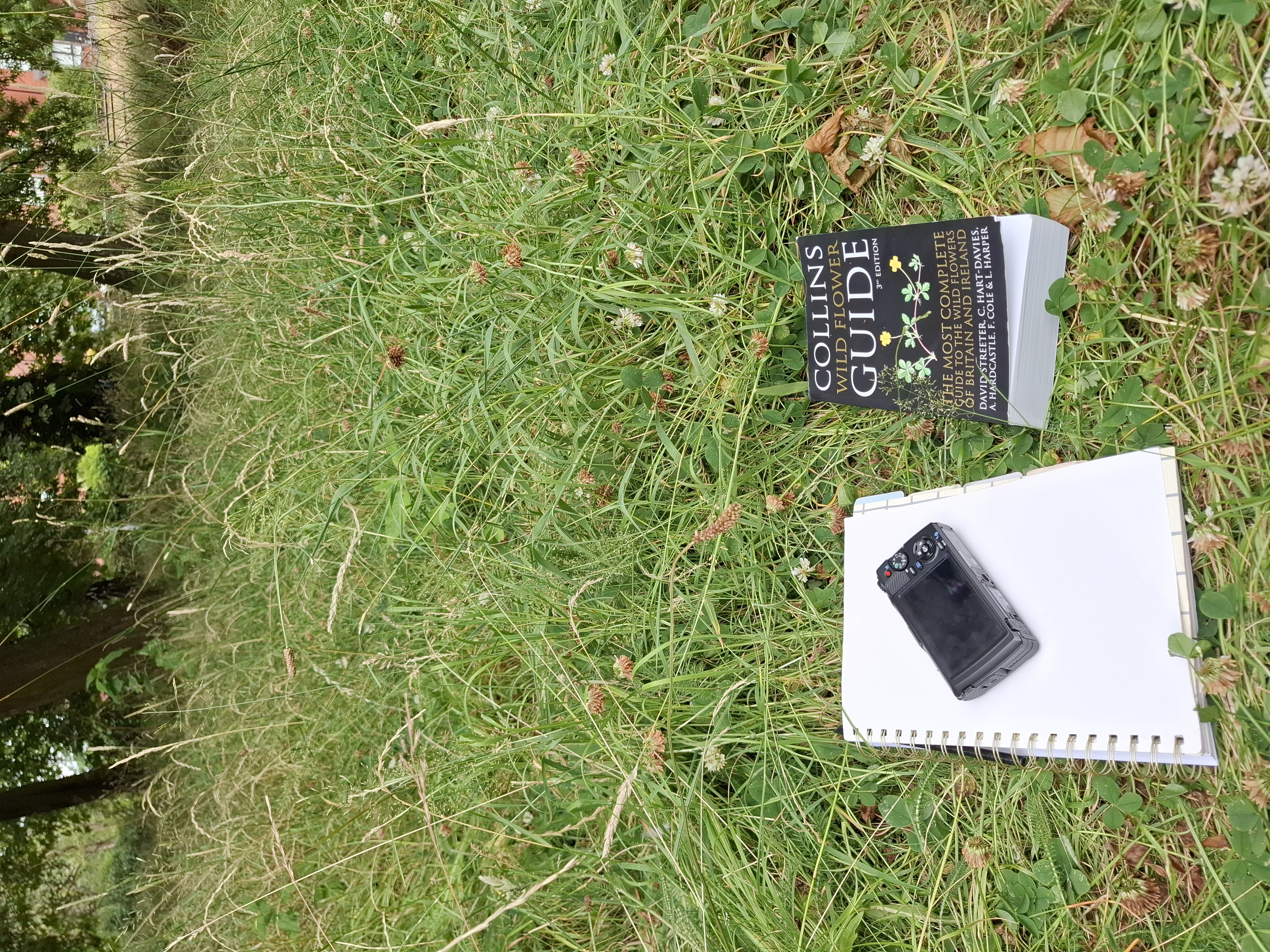
    On 10 July, I completed my first FISC (Field Identification Skills Certificate) assessment. Much of the first week of the month was dedicated to preparation: examining grass ligules through a hand lens, anxiously trying to recall key species, and spending countless hours immersed in my Collins Wild Flower Guide. Although I had spent months studying beforehand, the arrival of July suddenly made everything feel very real.

    What exactly is a FISC?

    A FISC (Field Identification Skills Certificate) is an assessment designed to evaluate your field botanical identification skills. Rather than being a pass-or-fail exam, participants are awarded a level from one to six, with higher levels reflecting increasing botanical knowledge and identification ability.

    To be honest, in the months leading up to the assessment I registered for back in March, I was incredibly stressed. Looking back, that pressure was unnecessary. After all, I chose to take the assessment myself, and its purpose is simply to measure your current level of botanical knowledge – it doesn’t define your future. But when I’m passionate about something, I have a habit of throwing myself into it completely and setting very high expectations for myself.

    Those worries disappeared as soon as I arrived in Lancaster. I quickly realised everyone was feeling the same way, and it turned out to be a genuinely enjoyable day.

    The assessment begins with the first laboratory session: ten widespread, common plant specimens to identify without the use of any guides. I was pleasantly surprised to find species such as Ragwort and Meadowsweet among them.

    The second laboratory section consists of twenty specimens and ramps up the challenge considerably. Many of the plants are less familiar, and identification guides are permitted, making it a very different test of your botanical skills.

    After lunch, the temperature climbed well into the 30s. We headed to the field site for the final component: a botanical survey alongside a gold-standard botanist, with our records assessed against theirs. This proved to be the most challenging part of the day. The habitat was fantastic – a species-rich grassland filled with fascinating and familiar flowering plants – but the intense heat began to take its toll on everyone, so the survey was wrapped up early for safety.

    I finished the day feeling incredibly proud of myself for taking the leap. It was a fun, memorable experience that pushed me outside my comfort zone and showed me how much I’d learned over the past year. I left feeling even more motivated to continue improving my botanical skills, and I’d happily take the assessment again.

    If you’re considering sitting a FISC yourself, I’d highly recommend giving it a go.

    Finally, a huge thank you to Josh Styles for being an outstanding assessor and for organising such a brilliant day.

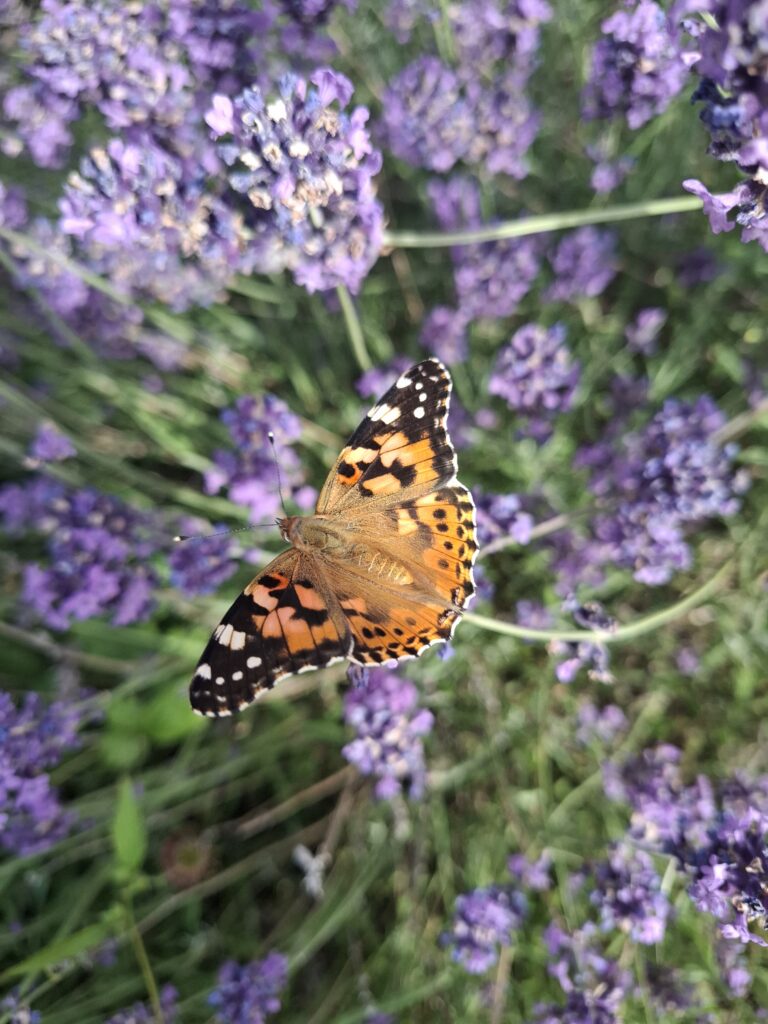
    Painted lady (Vanessa cardui) A very fresh specimen! The painted lady is a long distance migratory species, each year they spread northwards from North Africa. the Middle East, and central Asia, eventually reaching Britain.
    Painted lady (Vanessa cardui)
    A very fresh specimen! The painted lady is a long distance migratory species. Each year they spread northwards from North Africa. the Middle East, and central Asia, eventually reaching Britain.

    Big Butterfly Count

    As mentioned in my last month’s blog post, the big butterfly count began on the 18th of July and will be running until the 10th of August.

    This is a great nation wide citizen science project which helps track trends and inform conservation efforts across the UK.

    It is essentially a giant survey event, which individuals can take part in by choosing a spot in your garden, or any available greenspace, and spend fifteen minutes recording the butterflies or moths that visit.

    This is a fun and educational activity that encourages children and young people to get involved, making it enjoyable for adults as well.

    Big Butterfly Count follow the link for more information and resources to take part.

    A windy trip to Hilbre Island

    On 25 July, I had the pleasure of visiting Hilbre Island with two fantastic fellow naturalists, Dan and Crystal.

    This was very much a day out rather than an official field day, but as nature nerds tend to do, we couldn’t resist seeking out the wildlife and geological wonders that this remarkable island has to offer.

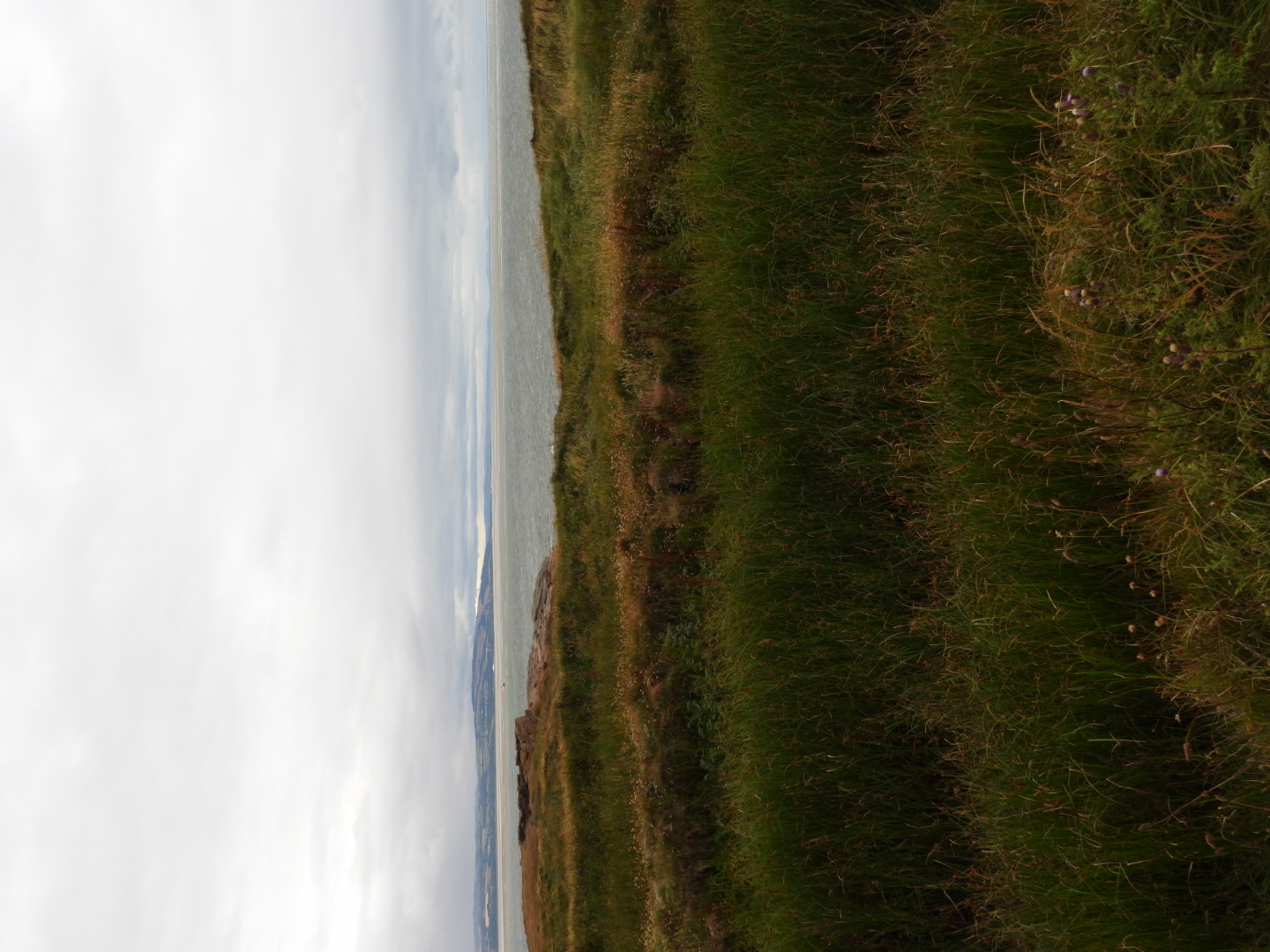
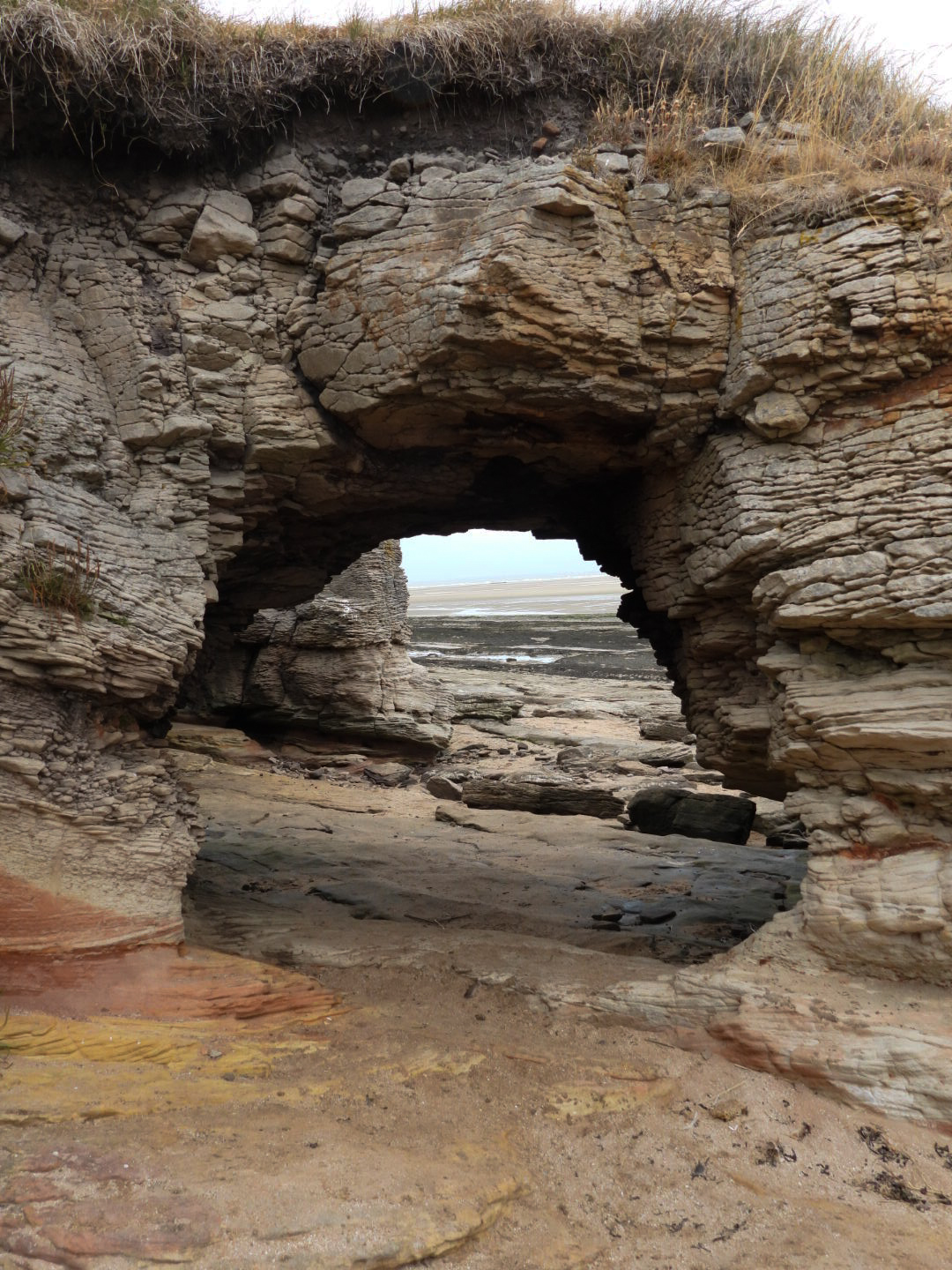
    We explored glistening rock pools left behind by the retreating tide, each harbouring its own miniature kingdom of marine life. We admired the sandstone cliffs, their hypnotic striations recording millions of years of geological history.

    Among the island’s flora, we found coastal specialists such as Sea Campion and Sea Lavender, alongside the faded remnants of Thrift, their once-vibrant flowers scorched by the recent spell of hot weather.

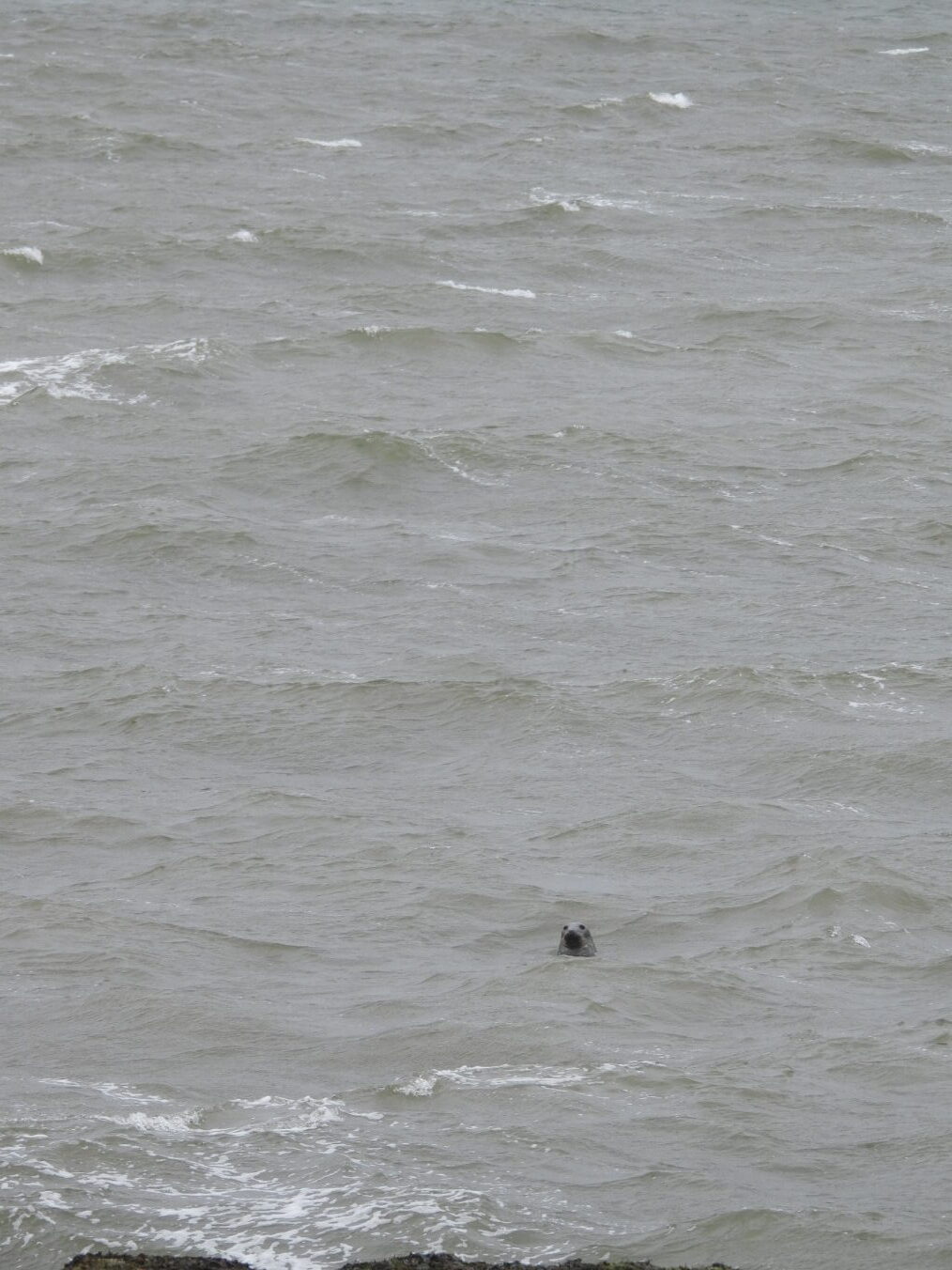
    One of the highlights of the day was discovering a large colony of Grey Seals basking on a sandbank. Later, as we stood on the far edge of the island with the wind whipping around us and the waves crashing below, a curious seal appeared offshore. It repeatedly bobbed its head above the water, as though it was playing hide-and-seek with us, before disappearing beneath the waves once more.

    Spot the seal ..

    July’s Highlights

    Site of the month – Kindling farm

    Kindling Farm is situated on Netherley Road. What makes this site truly special is the refreshing outlook of the team and the guiding principles they uphold in managing the farm.

    The organisation is deeply rooted in community, with its cofounders Chris and Helen passionately advocating for organic farming.

    I have been fortunate to join the biodiversity working team at Kindling, and every visit leaves me feeling uplifted after spending time in such a nurturing environment. As an environmental science student, I am particularly interested in organic farming because of its benefits not only for humans but also for the natural world.

    It’s a breath of fresh air to visit a place filled with uplifting views and people dedicated to making real change. Welcoming wildlife of all kinds, setting aside areas for nature to flourish, encouraging birds by installing owl boxes, creating scrapes for wading birds and water voles. Monitoring butterflies through transects, conducting monthly moth trapping, and hosting ongoing events to celebrate the thriving wild corners of the site.

    Kinding sets a precedent for farming practices. I believe we should all be advocating for our food industries to invest more in independent, community-driven agricultural methods. I highly recommend visiting Kindling, taking part in one of their events or getting involved by volunteering.

    The Kindling Trust – Visit Kindling’s website for detailed information and an up-to-date calendar of events.

    Thanks to the team for always making me feel so welcome, and all the cake.

    Species of the month –

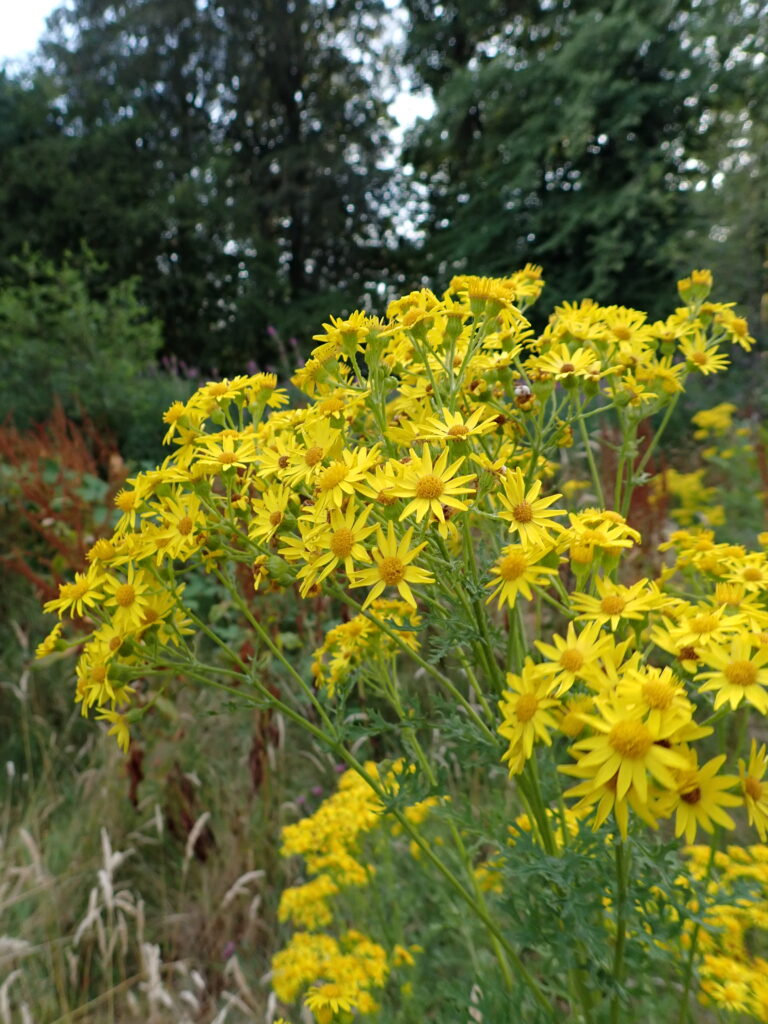
    Ragwort (Jacobaea vulgaris)

    This familiar yet frequently misunderstood member of the Asteraceae family highlights the importance of allowing our native plants to thrive.

    This year, we grew Ragwort in our garden, and it quickly became a hub of activity for invertebrates, from busy bees to graceful butterflies.

    It is also well known as the primary food plant for Cinnabar moth (Tyria jacobaeae) caterpillars, supporting one of our most recognisable and striking moth species.

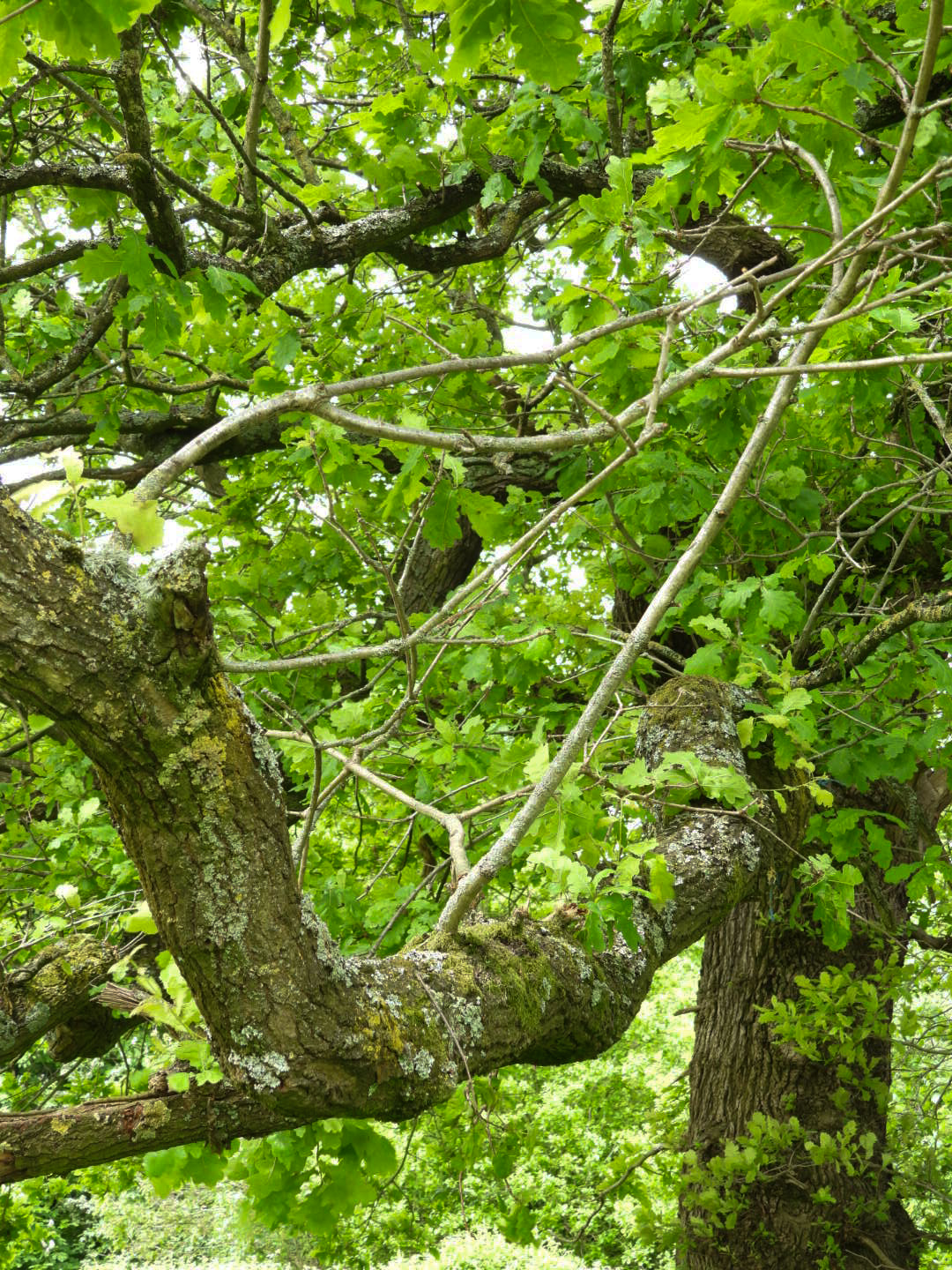
    The English Oak (Quercus robur)

    The English Oak supports a remarkable diversity of life, with its twisted bark, cavities, and lichen-covered branches providing shelter for countless species. Some estimates suggest that oaks can be associated with over 2,300 species, making them one of our most ecologically important native trees.

    The oak is my personal favourite; to me, it represents natural continuity. Under the right conditions, these incredible trees can live for over a thousand years, standing as witnesses to centuries of change.

    This resilient species thrives across many of our ancient woodlands, and during the warmer months its canopy becomes a hub of activity, supporting the countless organisms that depend on it.

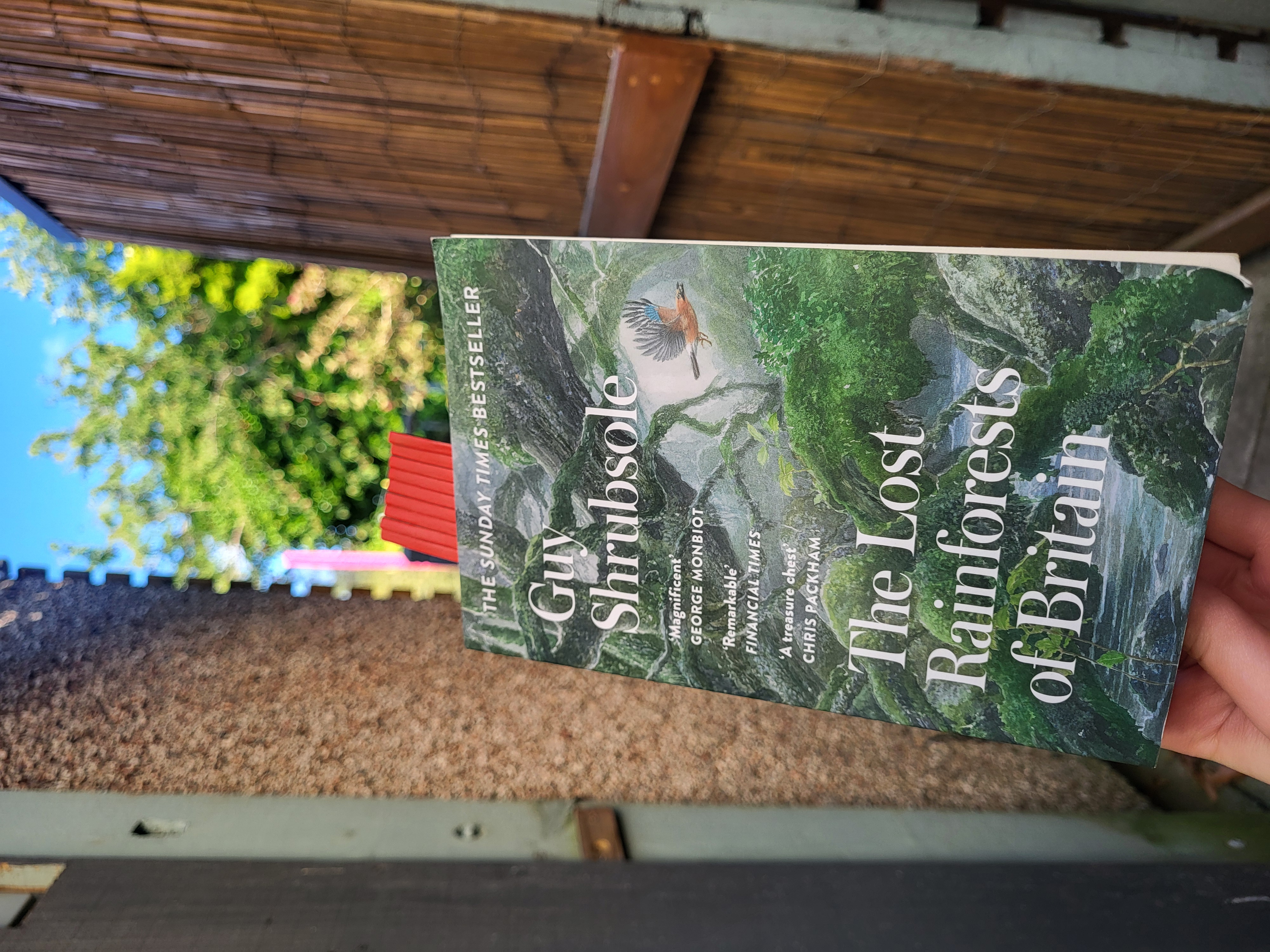
    This Month’s Book Recommendation:

    The Lost Rainforests of Britain – Guy Shrubsole

    This informative book reveals the secrets of one of Britain’s rarest habitats: temperate rainforests.

    From Scotland’s west coast to Dartmoor, our country was once home to these globally rare ecosystems, which now cover less than 1% of the UK.

    Guy Shrubsole explores the history of these forgotten landscapes and how we can protect and restore the remaining fragments of this natural wonder.

    Rating: ★ ★ ★ ★ ★

    –

    July reminded me why I spend so much of my free time outdoors. From learning alongside experienced botanists, to sharing wildlife recording with others, to simply standing on the edge of Hilbre watching a curious seal surface through the waves, every experience reinforced how much there is still to learn. As summer continues, I’m looking forward to seeing where the next path leads.

    Thank you for reading my July blog post. I hope you found it both enjoyable and informative.

  • First blog post – from spring into June!

    An honest introduction

    I began studying nature in a formal sense about four years ago, but I’ve felt the pull my whole life.

    As a child, I have strong memories: pond dipping at Halewood Triangle, bat walks and orienteering, picnics with my mum at Speke Hall looking at insects and wildflowers, walking in Reynolds Park, falling in love with plants in the secret herb garden. Nature has always been my safe place. And funnily enough, I came full circle and returned to these places as an adult.

    As a teenager, I developed a deep love for science but often found myself falling off path and trying to fit in – as many developing young adults do.

    A spark began to reignite when I was twenty. I became totally obsessed with fungi, spending copious amounts of time outside, on the floor (as many of us naturalists do), finding different species and learning about them.

    Then at twenty-two, after going through trials, grief, and being in the wrong places, I had a severe mental health crisis. Following that, I found myself spending hours and hours outdoors, becoming totally immersed, finding nature again as my solace. The only thing that truly allowed me to reach a state of peace.

    By twenty-three, I signed up for my Environmental Science degree. Then it snowballed. I started volunteering at Speke Hall, which led me to meet the most good-hearted, like-minded people – and I began to truly heal. I got involved with the Halewood Triangle volunteers and Merseyside Biobank. Then I started my own volunteer group in the area I grew up.

    A small army of people came to the first event to help clear up the green spaces in our area. We still meet every two weeks to keep these spaces in Netherley tidy.

    The people who have been part of my journey over the last couple of years know who they are – I hope you do, as you read this – and you’ll never truly know how much your support and friendship means to me.

    Nature healed me. Because of this, I swore my life to studying it, helping to raise awareness of its importance in any way I can. Even now, writing this, I find myself overwhelmed with gratitude for the natural world and all its wonders.

    I know this is raw – maybe a little unorthodox for an introduction to a nature blog. But that’s just who I am.

    This blog is my way of documenting the adventures, the special species, the people, and the places. I promise the rest won’t be so deep. Or maybe it will, actually – knowing me. But I know many of you reading this will feel the same pull, for very similar reasons. I believe nature is our greatest healer and our home.

    I don’t want to blind people with science either. I want to be a communicator to all walks of life that want to understand the wildlife on our doorsteps a little more.

    Now for the fun stuff!

    To start, I want to discuss the vibrant season when everything begins to bloom – spring. We’re now at the point where spring is giving way to summer, but I’ve been planning to launch this blog since April. There are still a few topics from spring that I’m eager to explore and share.

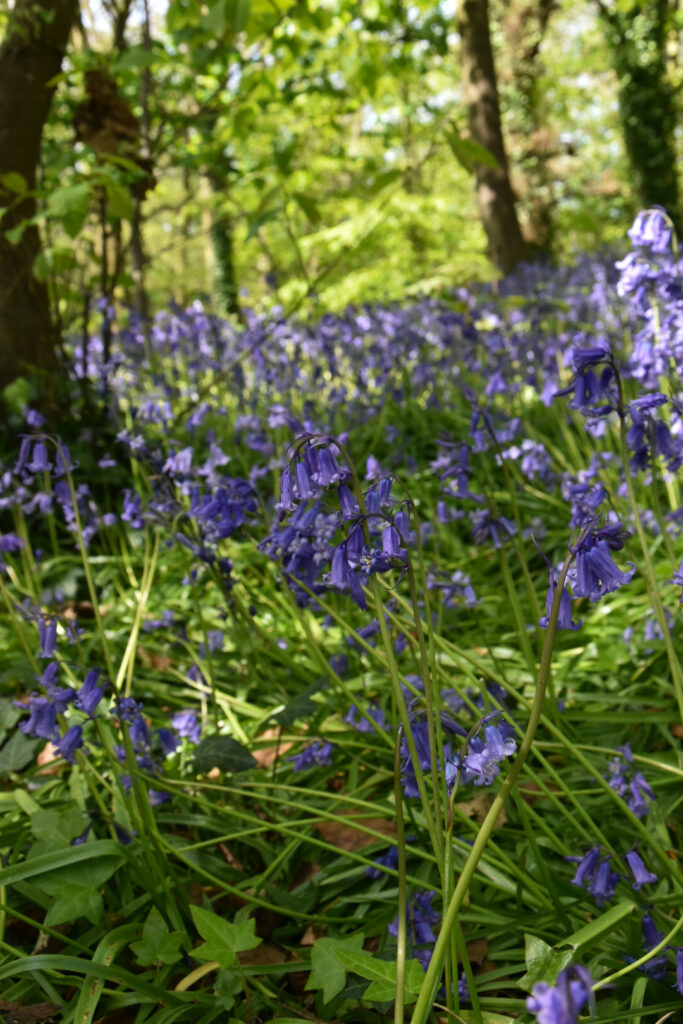
    This year, from April through May, a remarkable woodland wildflower created stunning carpets across many woodlands in Merseyside. The English Bluebell (Hyacinthoides non-scripta) was especially spectacular. One memorable location showcasing this natural wonder is Speke Hall, where the Clough woodland was completely blanketed in these enchanting blue flowers, forming a vast ocean of color.

    Our native English bluebells are an ancient woodland indicator species, as it takes hundreds of years for them to spread and establish.

    Native bluebell identification features include flowers that typically droop to one side of the stem, creamy-coloured pollen, and a delightful floral fragrance that fills woodlands on warm spring days. They also appear much more delicate and dainty compared to the invasive Spanish variety.

    Butterfly transects

    This year, I have been taking part in butterfly transects for the Butterfly Conservation Trust at Speke hall and Kindling farm.

    Butterfly transects are designated walking routes that collect data to better understand which species are thriving or declining, as well as their overall abundance throughout the season.

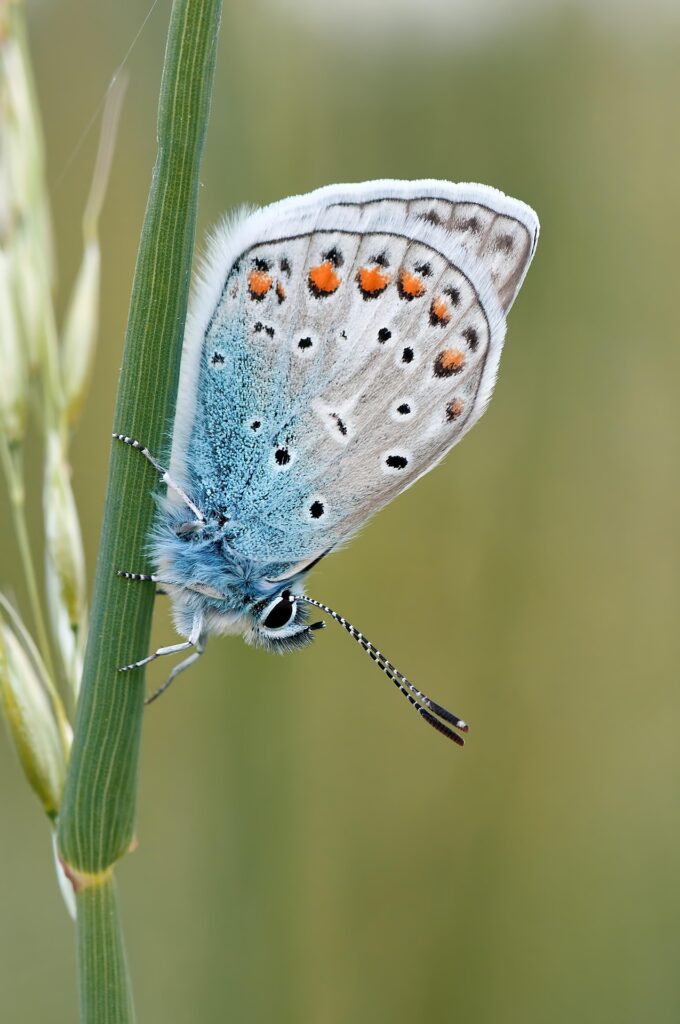
    My favorite butterfly so far is the Common Blue (Polyommatus icarus). Though small, they are beautifully intricate and depend on Birds-foot trefoil as their host plant.

    I have enjoyed the transects so far, they have given me a great opportunity to explore both sites through the season, and learn more about the different butterfly species we have in the UK.

    If you’re interested in butterfly monitoring, the BCT website offers lots of resources. Plus, the Big Butterfly Count is happening next month.

    Home page | Butterfly Conservationhttps://butterfly-conservation.org/

    June’s highlights

    Site of the month – Speke Hall, National Trust estate

    Speke Hall has played a significant role in my growth over the past few years. Being a ranger volunteer has given me invaluable experience and introduced me to incredibly supportive people. I cannot mention Speke without paying tribute to the amazing ranger, Cath Linden. Cath tirelessly cares for every aspect of nature at Speke, supports the volunteers wholeheartedly, and is an outstanding naturalist. Thank you, Cath, for your unwavering support and encouragement.

    An ode to Speke Hall

    Walking around this place fills me with peace.

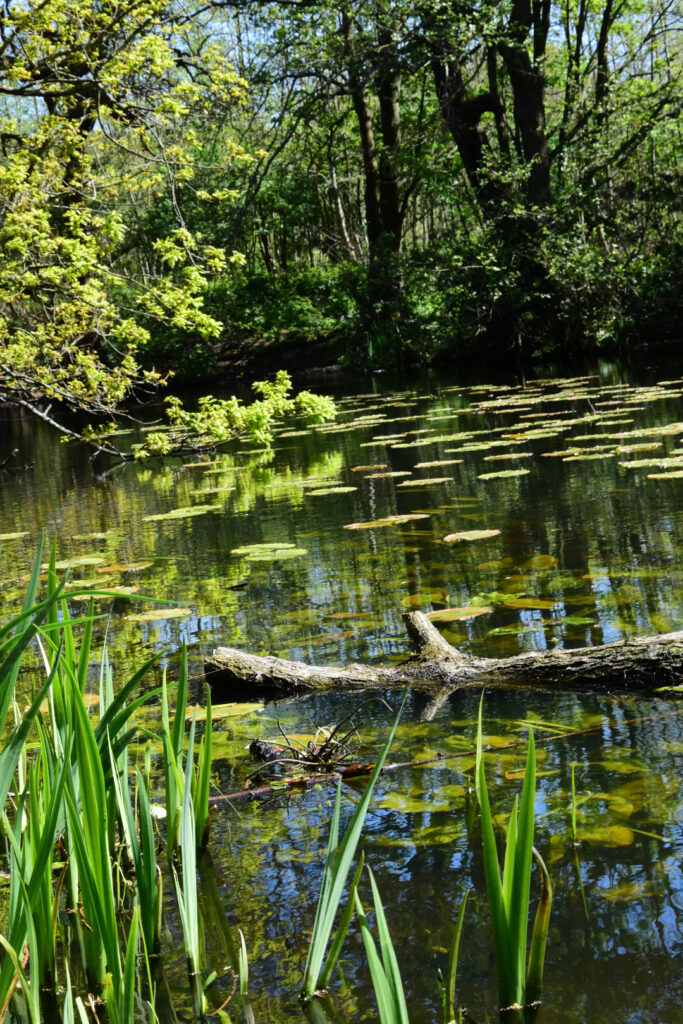
    Speke is a haven for nature, surrounded by the bustle of a busy city. Ancient meadows hum with insects, globally rare lowland heath survives amongst the grassland, and the historic pond beside which I write has reflected centuries of change.

    Today, a pair of coots drifted across the water with their juveniles in tow. Two balanced awkwardly on a fallen log, stopping occasionally to groom.

    It’s moments like these that make me pause.

    The landscape here holds the magic of times long past. The pond was visited by Tudors , and nearby Stockton’s Wood still stands much as it has for centuries, continuing to shelter tawny owls amongst its old oaks.

    What strikes me most about Speke is how history and nature are woven together. Ancient woodland, historic parkland, meadows and heathland all tell part of the story.

    Places like this matter. Not only because of the wildlife they support, but because they connect us to the people, landscapes and species that came before us.

    And as I sit beside the pond today, watching the coots and listening to the sounds of summer, I hope Speke continues telling its story for hundreds of years more.

    Species highlights –

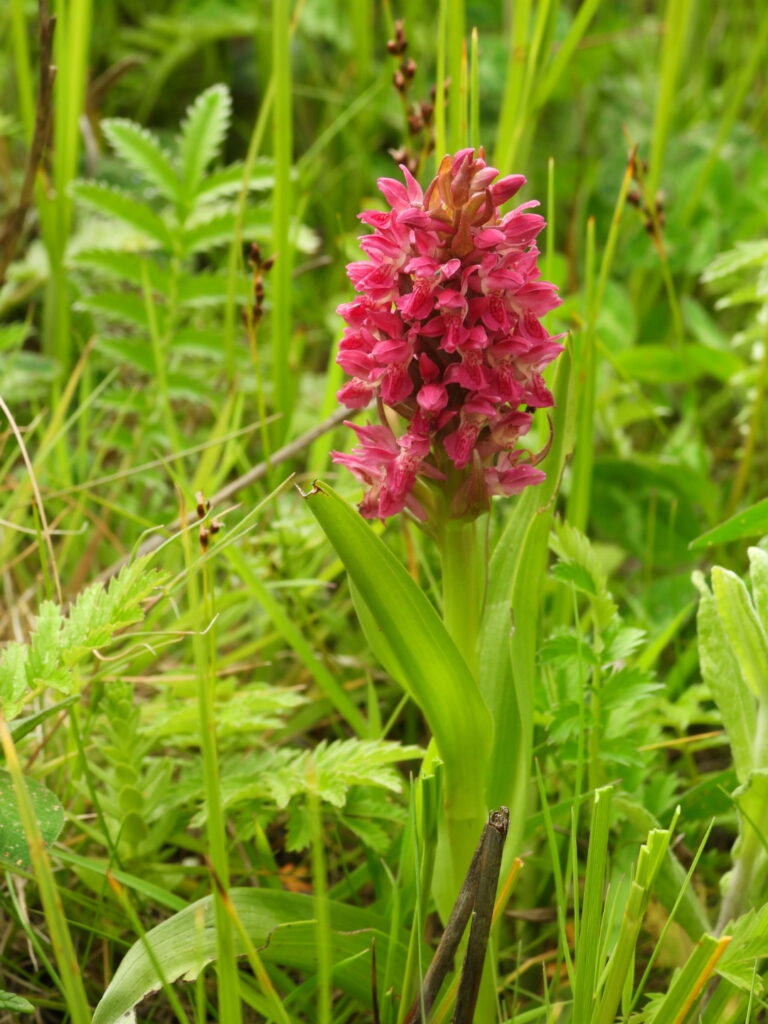
    Early marsh orchid (Dactylorhiza incarnata)

    I discovered these for the first time while visiting the Southport end of the Sefton Coast!

    Orchids are really magical, and a lot of people aren’t even aware that we have so many wild species in the UK due to habitat degradation, mainly from urbanisation.

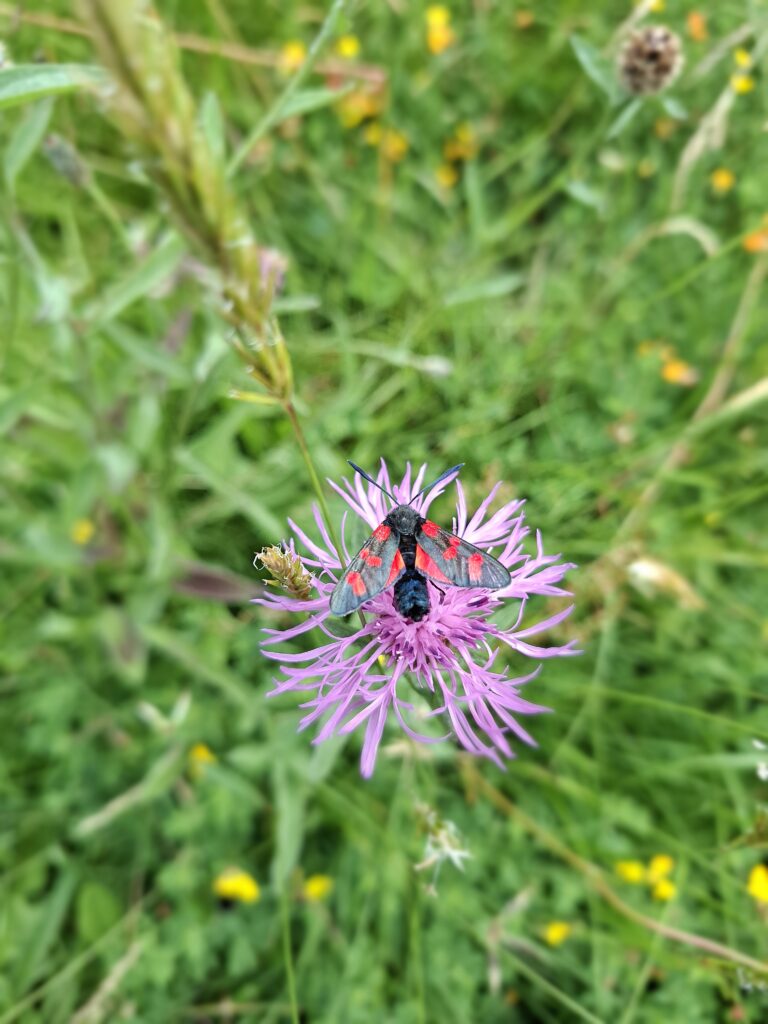
    Six-spot burnet moth (Zygaena filipendulae)

    Lots of these day flying moths flying around the Speke Hall meadows at the moment. I spotted loads whilst doing a butterfly transect!

    See, moths aren’t just brown, grey and boring ..

    Thank you for reading.

    I hope you enjoyed this brief glimpse into my interests, recent projects, and adventures. I look forward to sharing updates with you each month.

    Please don’t hesitate to reach out if you’d like more information on any of the topics covered. My contact details are available on the author’s page.