
Moths, Meadows, and Musings
This month, I have immersed myself in the small wonders that make spending time in nature so special and healing. As someone working to build a career in nature and ecology, it’s easy to get caught up in the technical details instead of simply enjoying the pure joy of observation.
While recording in my local area of Netherley, we spent time near where Mill Brook merges with Netherley Brook. As we watched the birds from the bridge above, a sudden flash of blue caught our eye – my very first sighting of a Kingfisher! It was an unexpected and beautiful reminder of how much we can miss when we don’t take the time to pause and truly observe.
This was unexpected, given the brook has numerous sewage outflows, both legal and illegal (the latter have been reported and will hopefully be addressed in time). It truly demonstrates the resilience of nature.
During a sunset walk around Kindling Farm to plan an upcoming bat walk in early September, we set out with bat detectors to find the perfect route. While patiently waiting for the bats to emerge, a distant silhouette swooping across the fields caught our attention: a barn owl embarking on a night of hunting across the ancient agricultural landscape. It stole the show, gliding gracefully through the evening sky, past the waxing gibbous moon, as dusk gave way to night.
From watching wildlife to helping habitats recover…
Native wildflower meadows
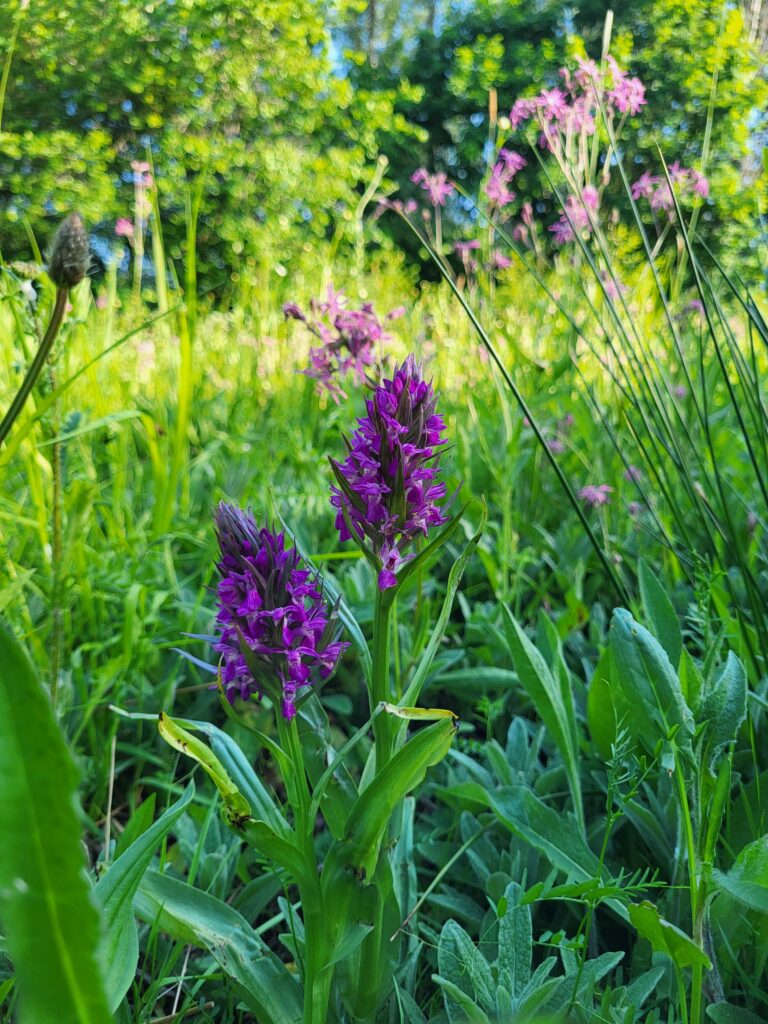
In recent years, meadows have become a central focus of my learning. At the close of 2024, I had the privilege of meeting the remarkable Josh Styles, who has successfully transformed local species-poor grasslands into thriving meadows teeming with wildflowers such as orchids, yellow rattle, bird’s-foot trefoil, knapweed, ragged robin, Dyer’s greenweed, and a rich diversity of other plants.
Since meeting Josh, I have become immersed in the magic of these habitats and begun to share his passion for restoring them.
I began helping with the management of these grasslands and gained a good understanding of what makes a healthy grassland habitat.
Josh created and manages these areas using a traditional cut-and-collect method, typical of hay meadow management. Simply put, this involves cutting the grasslands at the end of the summer season and removing the clippings to prevent them from decomposing and returning nutrients to the soil. Historically, the removal of vegetation by grazing animals would have played an important role in maintaining open grassland habitats, but with traditional management becoming increasingly uncommon, Josh carries out the task with his trusty scythe. I follow behind him with a rake, gathering the hay and moving it away from the meadow.
Josh also takes great care in sourcing native wildflower seed from local reserves and conservation sites. Species such as yellow rattle and devil’s-bit scabious have been sourced from places including Martin Mere, helping to increase the botanical diversity of these restored grasslands while retaining a strong local connection to the species being introduced.
This process is vital for reducing excess nutrients in the soil, allowing native meadow species to thrive in nutrient-poor environments. Over the last century, increased fertiliser use has changed soil composition, harming our native wildflower meadows. As a result, 97% of these habitats have been lost, with what remains now occupying less than 1% of the UK.
If you want to learn more, check out Plantlife’s Good Meadow Guide.
Species that depend on these habitats have declined as these areas have degraded. One notable example that I had the pleasure of studying as part of one of my modules at university is the Turtle Dove, which has undergone a dramatic decline in the UK alongside the loss of suitable feeding habitat. Turtle Doves rely heavily on the seeds of wildflowers and other plants for food, making species-rich meadows and other seed-rich habitats an important source of food for these declining birds. As these habitats disappear, so too does an important source of food for many species.
The regenerated grasslands in Netherley have become a vital hub for local wildlife. These meadows support a diverse range of specialist pollinators, provide abundant food for birds, and serve as hunting grounds for birds of prey. Even the stacks of green hay create essential winter habitats for small mammals like voles and hedgehogs.
I have also designed investigations for my degree comparing pollinator diversity between species-poor and species-rich grasslands in the area. The results were clear: the species-rich meadows supported significantly higher numbers and a greater variety of pollinator species.
Another significant benefit of these areas in Netherley has been for us humans and community building. This year, during the City Nature Challenge we held an event with Biobank, our main focus was recording observations in the meadows due to their incredible biodiversity. Other events included a meadow walk led by Josh, followed by a successful bioblitz in the grasslands.
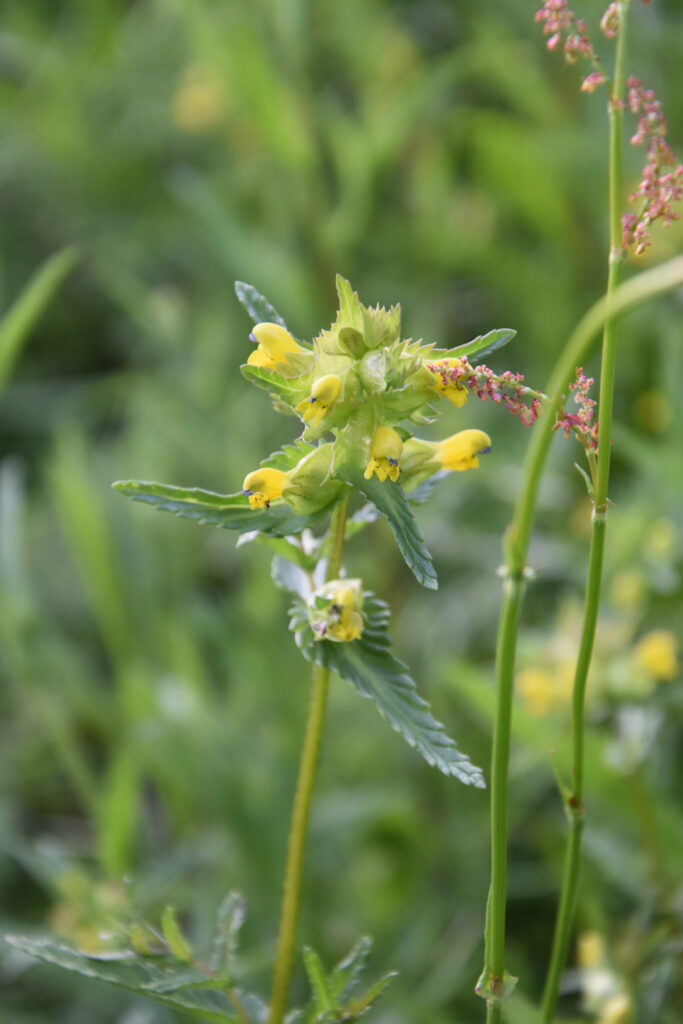
This semi-parasitic wildflower is also known as the ‘meadow maker’. This is due to how it parasitises grasses, attaching to their roots and drawing nutrients and water from them. By weakening the grasses, yellow rattle reduces their dominance and allows other wildflowers the space and light they need to thrive.
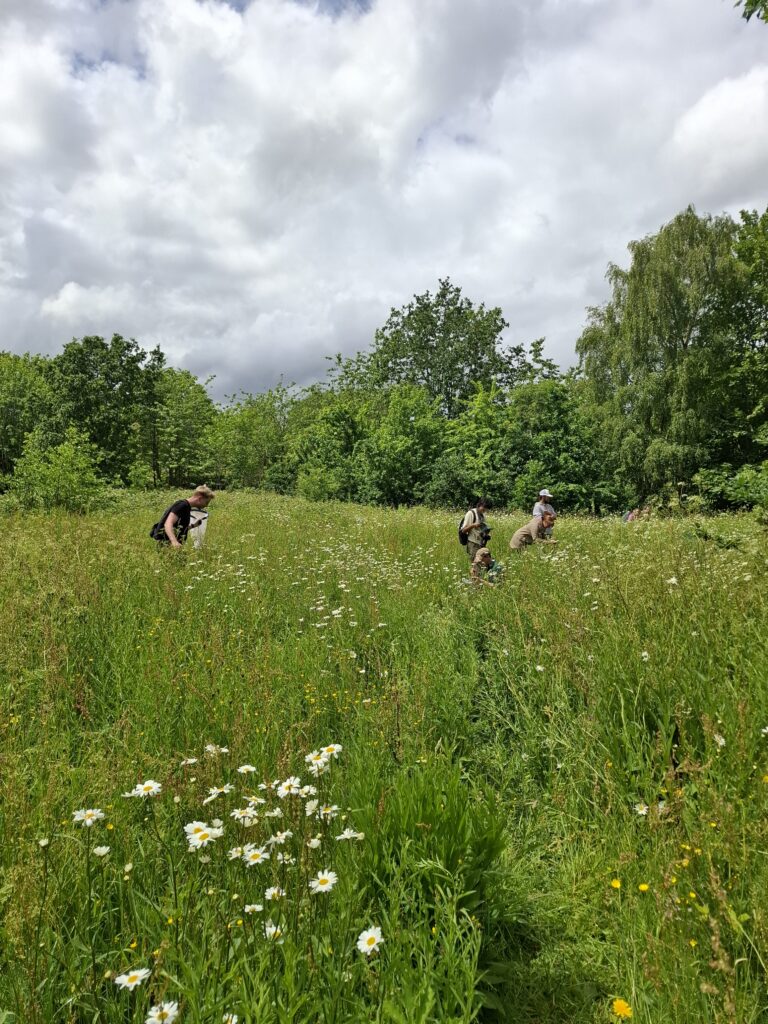
Standing in one of Josh’s restored meadows in full flower, it’s hard to believe these fields were species-poor grassland just a few years ago. That transformation, from green desert to something buzzing with life – is why this work matters. And it starts with a scythe, a rake, and the patience to let the land recover.
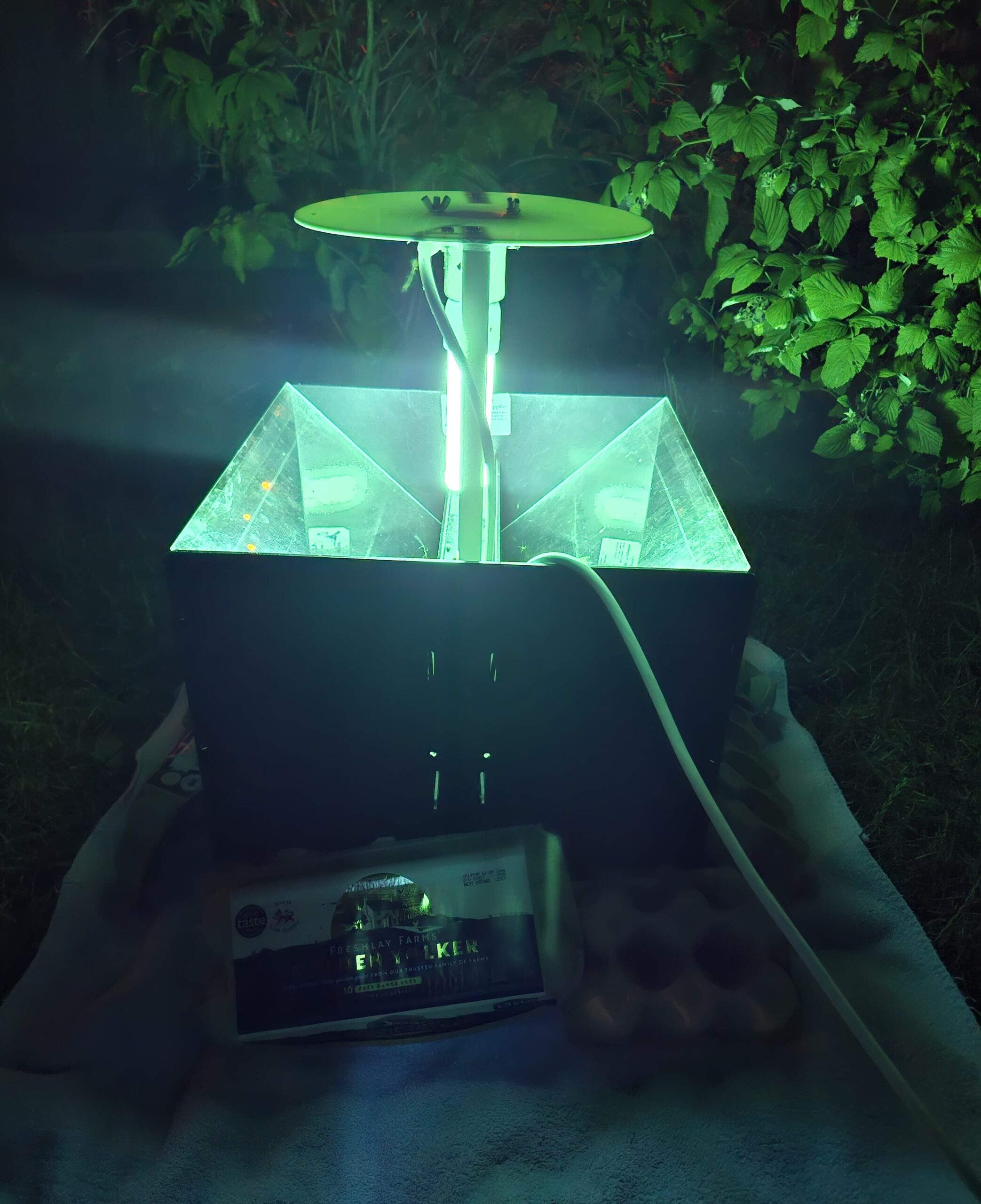
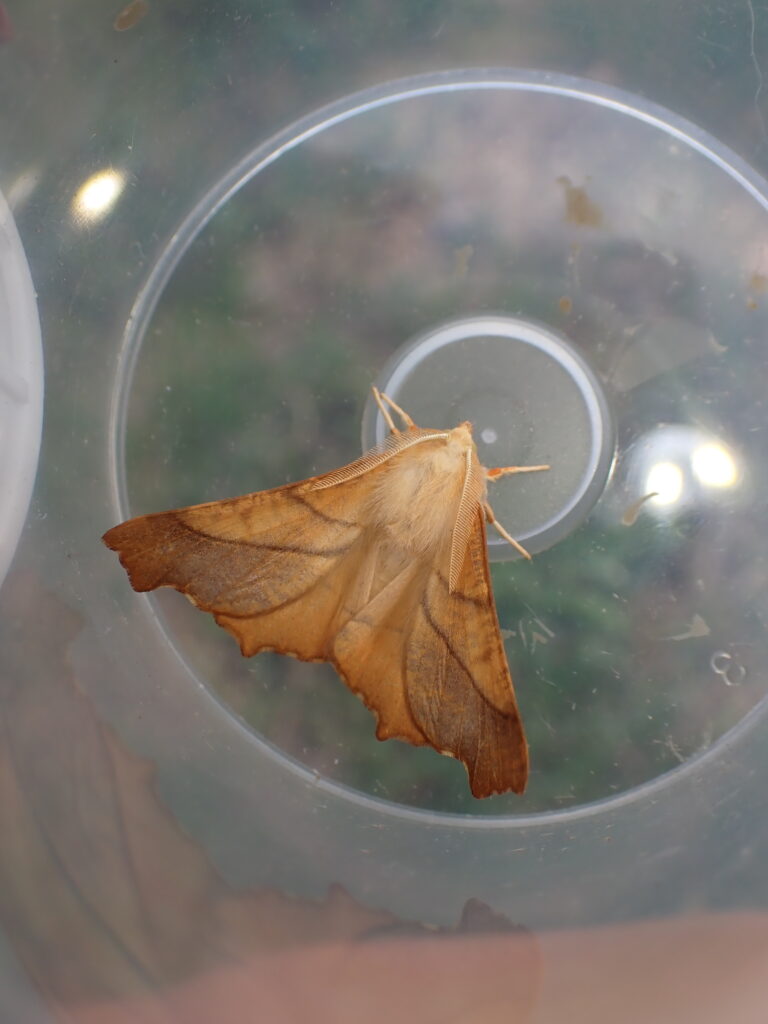
A beautiful moth trap find from this week.
Moth trapping
In May, I was given the opportunity to borrow a moth trap from Butterfly Conservation for this year’s season, helping to contribute to local biological records.
It has been one of the most fascinating experiences I’ve had this year, especially as moth trapping was completely new to me. Moths are often the overlooked side of Lepidoptera, frequently dismissed as dull or uninteresting, and many people seem to have a genuine disdain for them.
It’s unfortunate that moths are so often overlooked. While butterflies are widely admired for their beauty, moths are their close relatives and just as fascinating in their own right, and actually far more diverse. Most species are nocturnal, meaning that much of this incredible diversity goes unnoticed.
Many people underestimate the incredible diversity of these creatures and the remarkable beauty of various species, from the delicate swallow-tailed moth to the vibrant pink and green elephant hawk-moth, and the strikingly patterned eyed hawk-moth.
The more I’ve learned about them, the more I’ve realised just how much beauty is hidden away after dark. And anyone who has spent time with me knows I do love a good wildlife spotting adventure at night, it pairs extremely well with my nocturnal self.
If you are interested in learning more about moths, I suggest attending some local moth trapping events. Or, getting a trap for yourself! They can be bought or if you’re feeling creative, it’s very possible to make your own with just a bucket, funnel, a UV light, and some egg boxes!
Here are a couple of useful links –
UKMoths | Guide to the moths of Great Britain and Ireland
This months highlights
Site of the month – Norton Priory
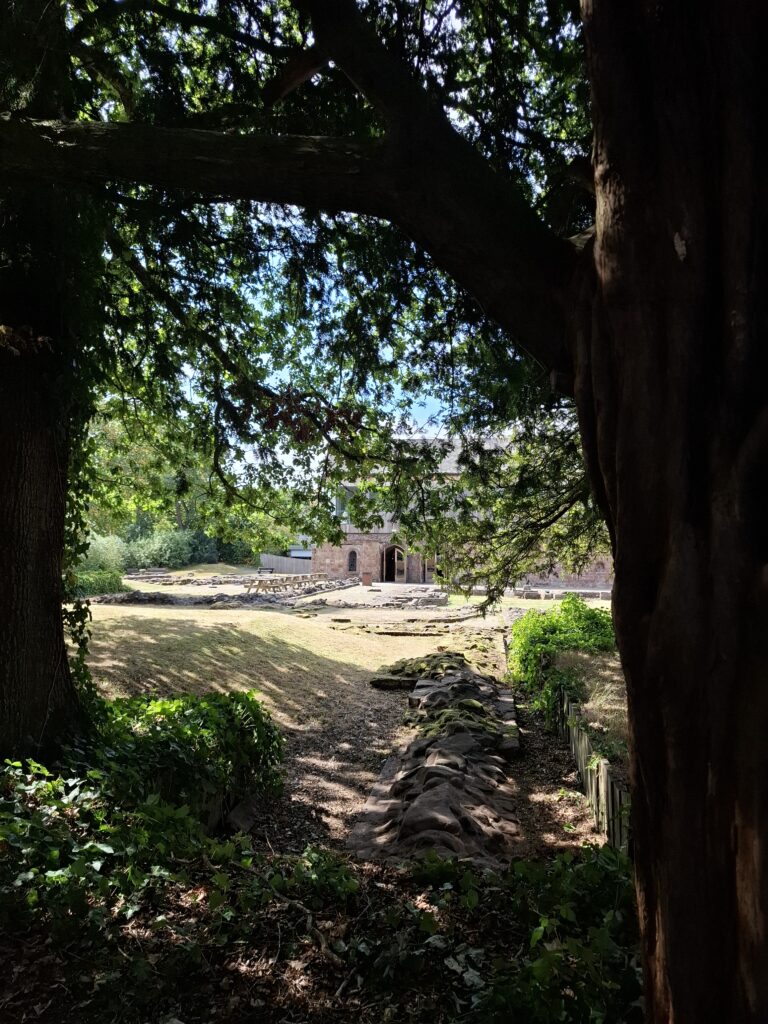
This month, I finally got to visit Norton Priory, and it certainly didn’t disappoint.
If, like me, you’re interested in both history and nature, I highly recommend exploring not only the museum but also the beautiful grounds and walled garden.
I have a real passion for continuity when it comes to nature. I’m often most awestruck by landscapes that have managed to remain preserved throughout hundreds of years, carrying traces of the generations that came before us. With this site once being home to a medieval church, and comprising the remains of an abbey complex dating from the 12th to the 16th centuries, Norton Priory has this in bucket loads.
Generations of yew trees hang over the excavated burial grounds, with chicken of the woods fungus growing from their trunks. Veteran oak trees can be found throughout the woodland as you make your way towards the walled garden.
If you have an interest in insects, I highly recommend a visit to the walled garden. It was teeming with bees, wasps, hornets, butterflies, and so much more. I could have sat for hours just watching them buzz across the gardens.
Have a look at the website to learn more, or book on to one of their nature events –
Norton Priory Museum | Garden | Medieval Buildings Cheshire
Events | Norton Priory Museum Trust Ltd
Species of the month –
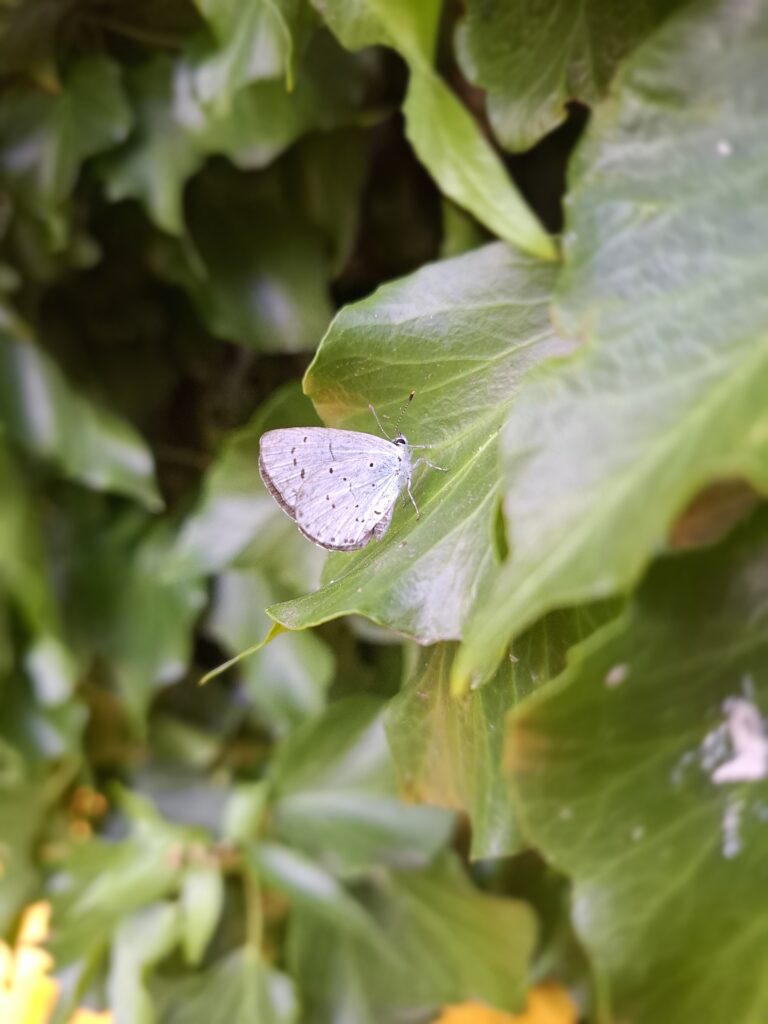
Holly Blue Butterfly (Celastrina argiolus)
This tiny but stunning silvery-blue butterfly most often uses holly as its host plant, so I was particularly interested to watch this one laying eggs on the English ivy flower buds in my garden.
It turns out that in late summer, when holly is no longer suitable for the final brood of the year, holly blues will also use English ivy as a host plant. The caterpillars that hatch from these eggs feed on the ivy’s flowers before eventually pupating.
They then overwinter as pupae, hidden amongst leaf litter or in overgrown areas. After undergoing metamorphosis, they emerge the following spring as the first generation of a new year.
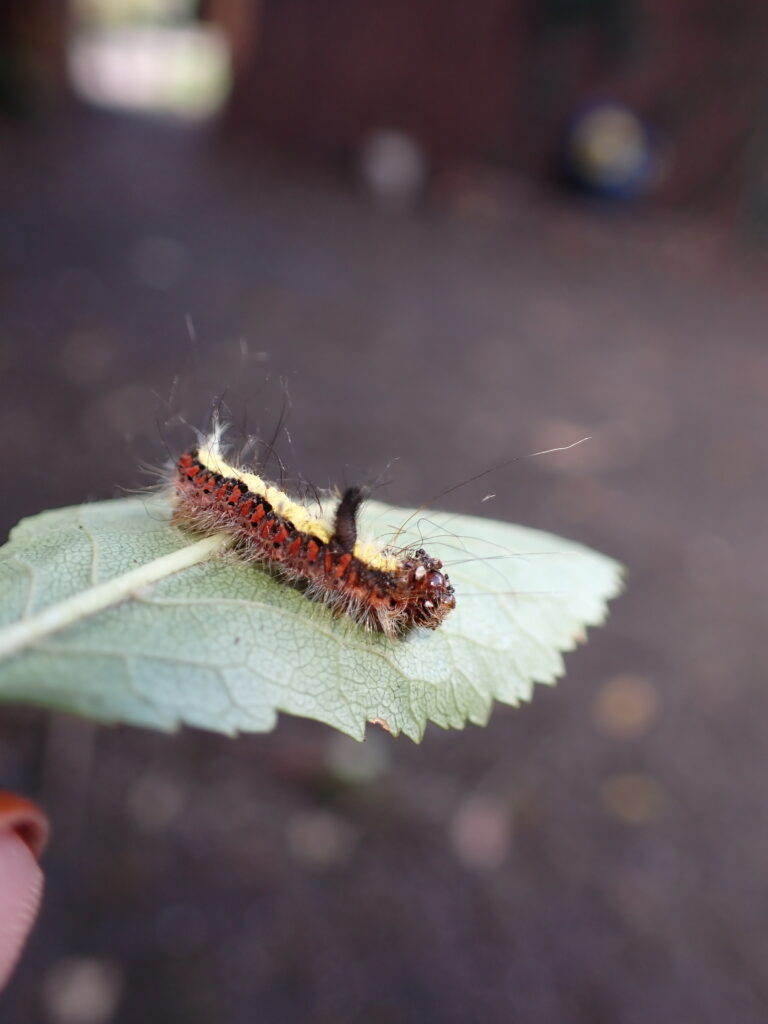
Grey Dagger Moth caterpillar (Acronicta psi)
This is another garden find. I spotted this interesting caterpillar wriggling across the leaf litter and had to take a closer look.
The caterpillars spend the summer feeding on a range of deciduous trees and shrubs before seeking out a sheltered spot to pupate. Finding this one making its way through my leaf litter may therefore have been a glimpse of the next stage of its life cycle.
After a quick photoshoot, I placed it back exactly where I found it so it could continue on its way.
This month’s blog is quite a lengthy one, and to be honest, I had to hold myself back from writing even more! So, if you’ve made it this far, thank you so much for reading, as always. I hope you found it both entertaining and insightful.
Leave a Reply