
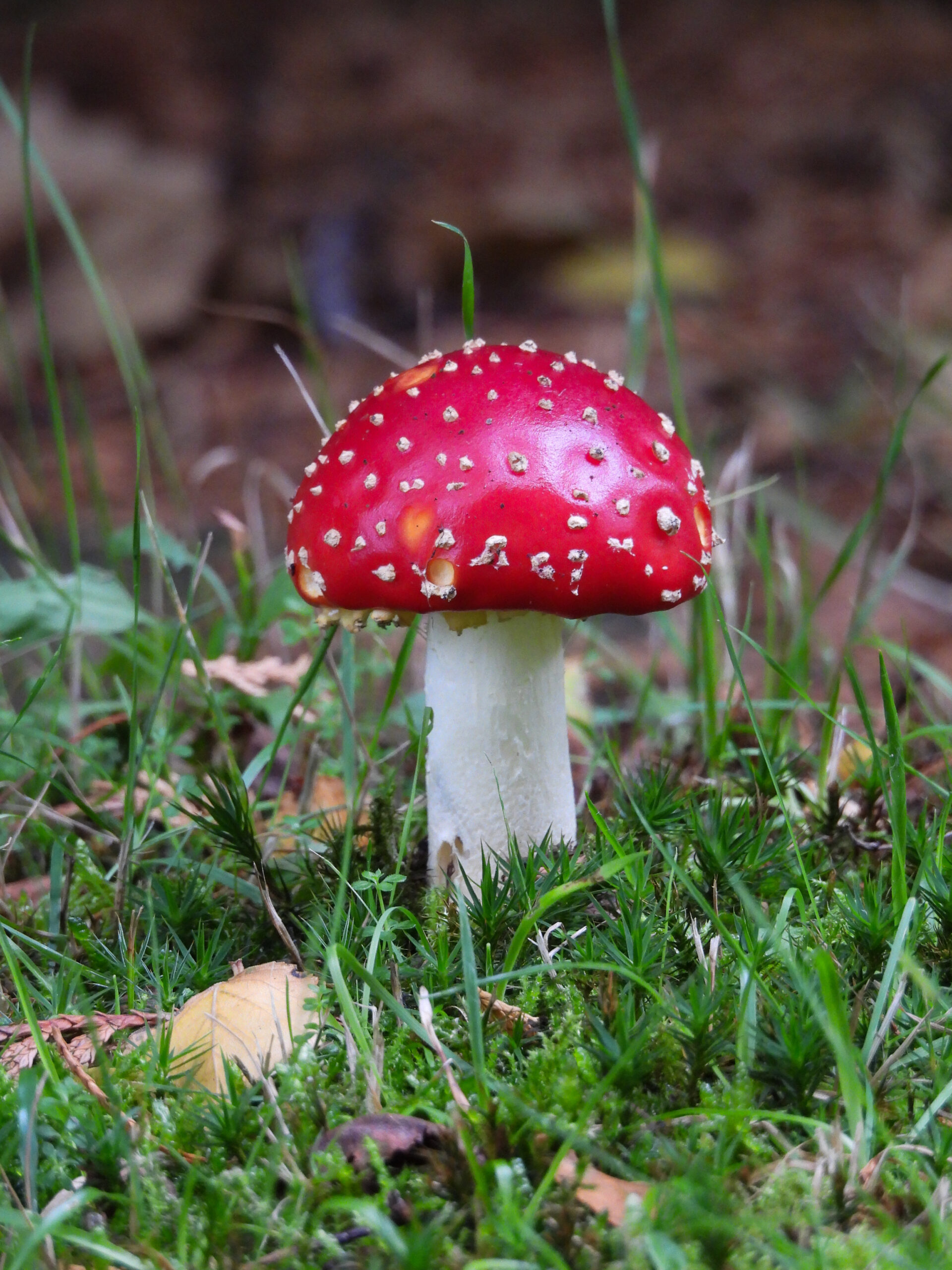
Fungi, Heritage, and Hidden Histories
This month has brought a lot more rain, and although the leaves are beginning to turn into their vibrant autumnal colours, creating vast palettes of oranges and reds before carpeting the ground, grasses have returned to their green state. Plants are beginning to look vibrant again, rather than drought-ridden and brown. Putting on one last display before succumbing to the season upon us.
These conditions have allowed one of my favourite kingdoms to begin fruiting: the Fungi Kingdom. Bracket fungi, mushrooms, and slime moulds are beginning to emerge in a wonderful variety of shapes, colours, and forms.
Many people are afraid of fungi, and I can understand why. They are full of unknown mysteries, so much so that they have become deeply ingrained in folklore and fairy tales. Often representing death and decay, fungi can seem mysterious and even sinister. But what many people miss is the amount of life they provide.
They transform the remains of plants, insects, mammals, and almost every other form of life into nutrients, food sources, habitats, and healthy soil. They are fundamental to the cycles of life and death, and yet they remain so often misunderstood.
If you can’t tell, I realllly love fungi!
Mycelial Magic
Hidden underground for most of the year, mycelial networks work their magic beneath our feet, waiting for the right conditions to produce fruiting bodies. The fungi we see above ground are, in fact, just the reproductive part of a much larger organism.
Mycelial networks can span enormous distances beneath the ground. The largest known fungal organism in the world is in Oregon, associated with the Humongous Fungus (yes, that’s its real common name!). It covers an estimated 2,385 acres and is thought to be between 2,400 and 8,650 years old.
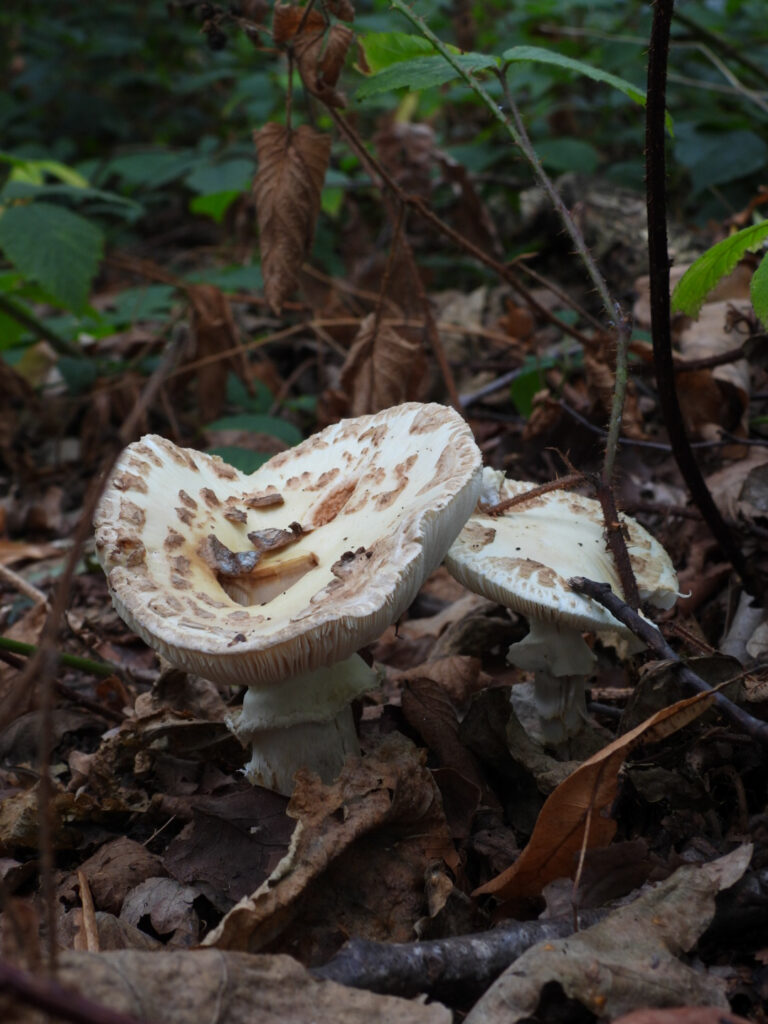
But perhaps one of the most fascinating things about fungi is the relationships they form with the plants around them. Amanita muscaria, alongside many other fungal species, forms a symbiotic relationship with trees such as oak, birch, and conifers.
The words ‘symbiotic’ or ‘mutualistic’ describe relationships between species where both organisms benefit from the connection.
Known as mycorrhizal relationships, these partnerships connect fungal mycelium with the roots of trees, effectively extending their reach into the soil. The fine threads of mycelium can access water and nutrients from areas beyond the reach of tree roots, while the fungi receive sugars produced by the tree through photosynthesis in return.
It is a remarkable partnership, hidden almost entirely from view. Beneath the woodland floor, an intricate network of fungi is constantly interacting with the plants around it, helping to move nutrients and supporting the wider ecosystem.
The ‘Wood Wide Web’ is a widespread and often-used analogy for the mycorrhizal connections found throughout many established woodlands.
Fungi are also indicator species that are often overlooked. Their presence can tell us something about the conditions of a habitat, including soil health and ecological continuity. Some species are particularly associated with ancient woodlands, grasslands, and other long-established, undisturbed habitats.
So when we see fungi fruiting amongst ancient trees, we aren’t simply seeing a mushroom growing from the ground. We may be seeing another small piece of the history of that habitat.
It’s easy to look at a mushroom and see a small organism growing from the soil. But what we are actually seeing is just the tip of something much larger.
Habitats and Heritage
Are they really separate?
Thinking about fungi as ancient habitat indicators over the last couple of weeks has got me thinking about how many of our protected historical sites and culturally important spaces, preserved for their heritage, also retain some of the most valuable habitats across the country.
I often visit a local churchyard, All Saints’ Church, Childwall. It is the oldest church in Liverpool, and the churchyard itself seems to tell that story.
On one side, where the oldest graves stand amongst large oaks and yews, there is always the most beautiful array of fungi: brittlegills, milkcaps, boletes, blushers, and fly agarics.
The other side is more open, with bountiful displays of sheep’s sorrel and fox-and-cubs, mossy floors, wax caps, and other signs of its ancient history skirting the church.
And it isn’t just churchyards. Speke Hall and Norton Priory are two more examples of places where history and nature have remained intertwined. Both sit within urban areas, yet they hold little oases of natural continuity, preserving habitats and landscapes that might otherwise have been lost to development.
Perhaps this is one of the things I love most about heritage sites: they don’t just preserve our human history. Sometimes, they preserve a little of nature’s history too.
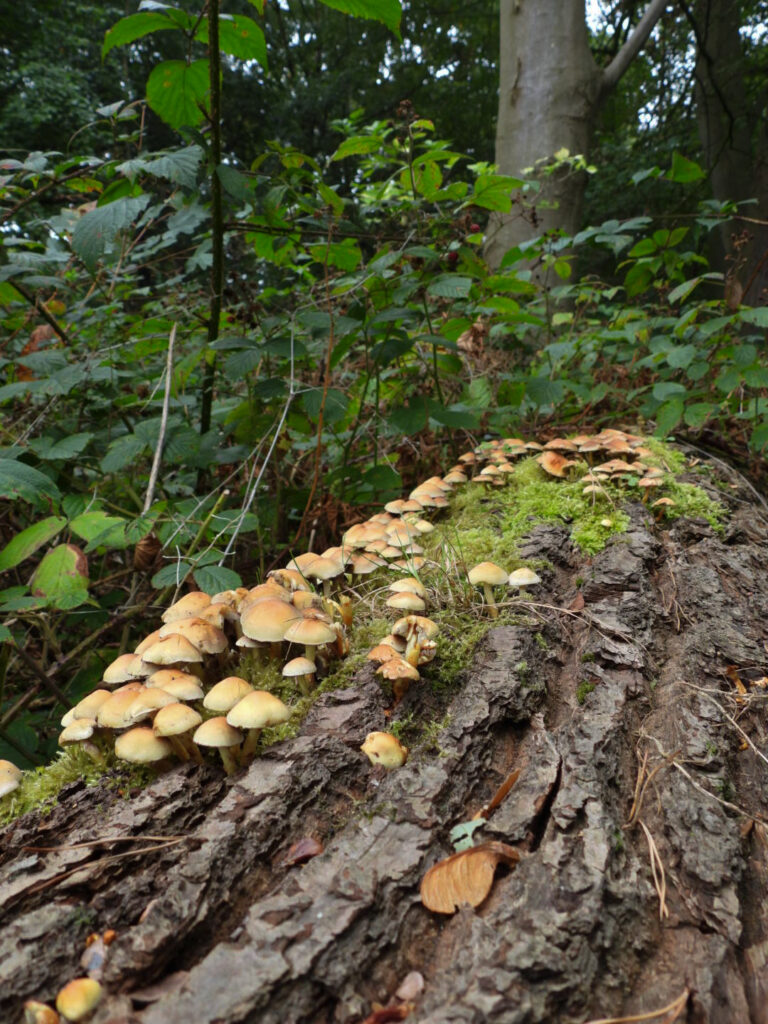
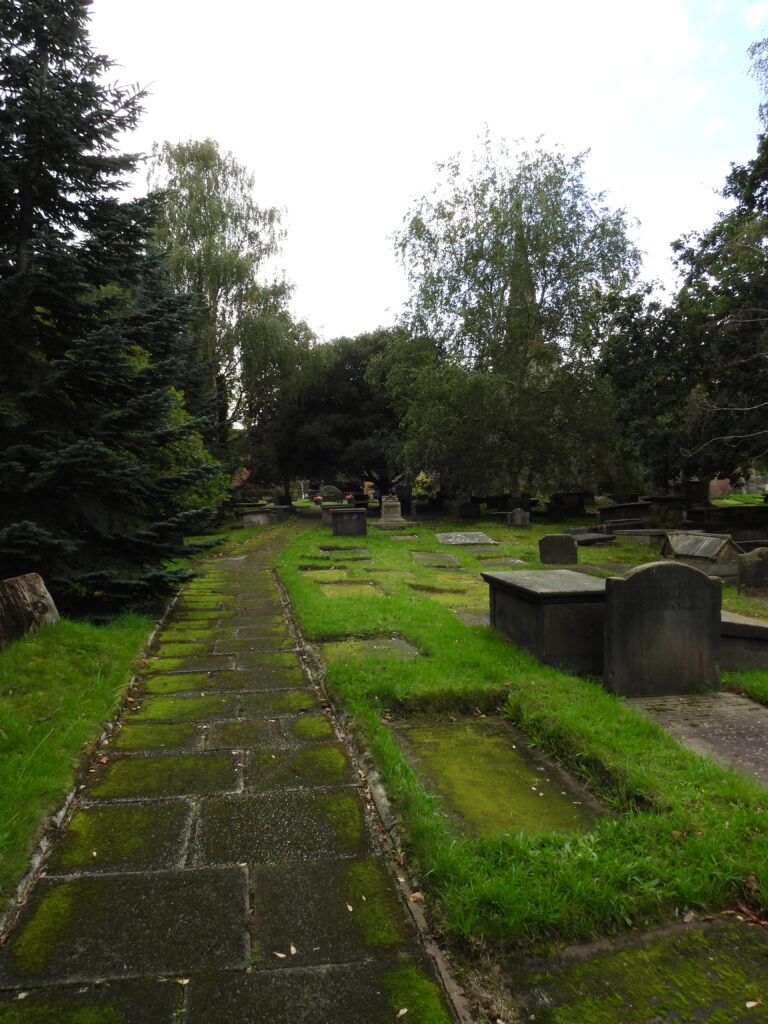
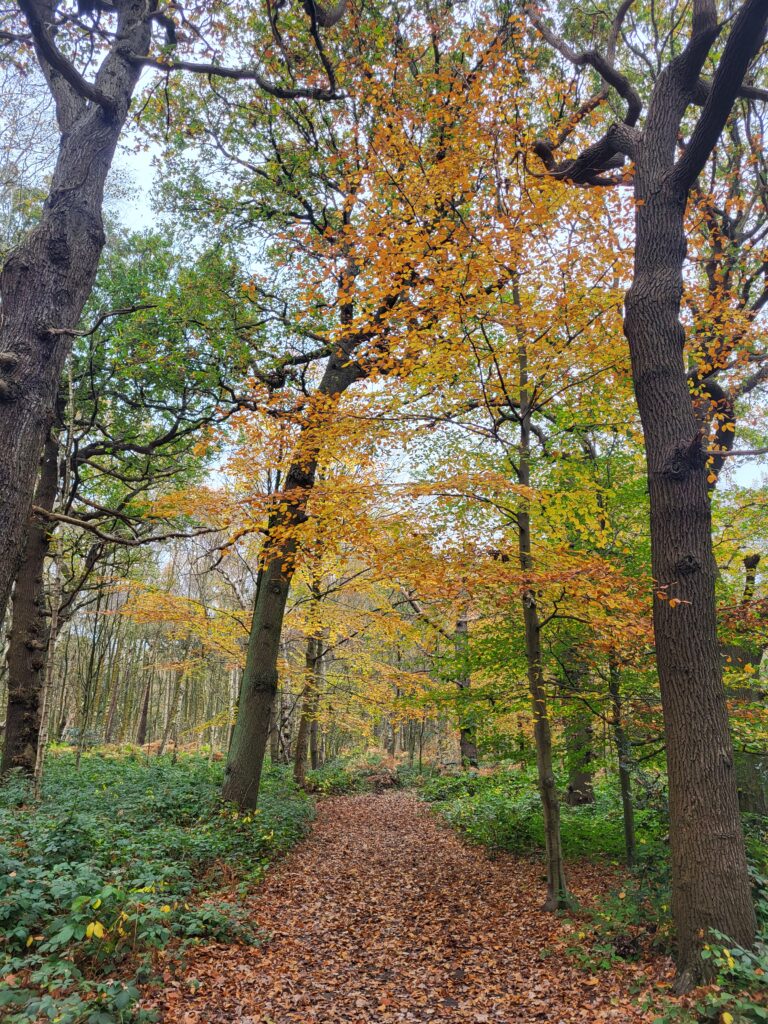
Because these sites have been so meticulously protected, the habitats encompassing them have also been allowed to coexist, often for generations, although they are frequently treated as less important.
I think this needs to change. So often, these habitats tell a story far older than the ‘human’ heritage we tend to recognise and protect. Ancient trees, fungi, mosses, grasslands, soils, and the species that live amongst them are all part of the history of a place.
Perhaps we shouldn’t think of nature and heritage as separate things at all. The landscape itself is part of the story.
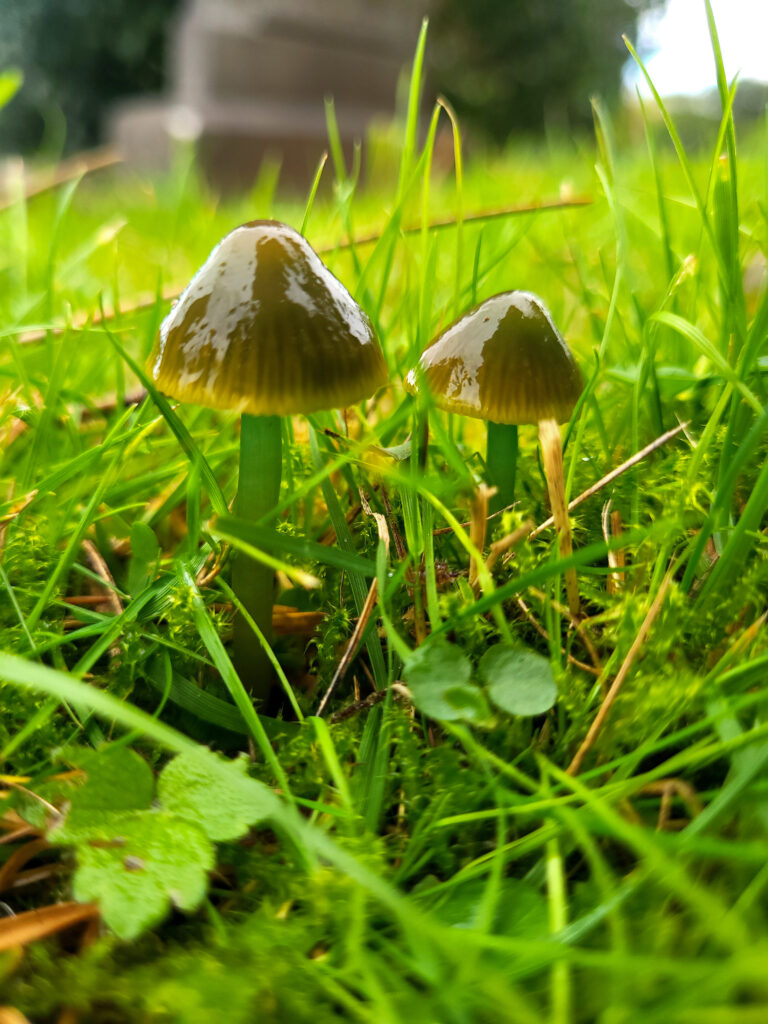
Plantlife’s Waxcap Watch
Waxcaps are an indicator of rare, species-rich grassland and by tracking where waxcaps and other grassland fungi flourish, we can identify and safeguard the fragile remnants of ancient meadows for future generations.
Beyond serving as vibrant havens for hundreds of native wildflowers, these ancient grasslands play a vital role in combating climate change. In fact, biodiverse, species-rich grasslands are capable of storing up to a third more carbon than monoculture or low-diversity areas.
September Highlights
Site of the month – The Nature Reserve @Calderstones Park
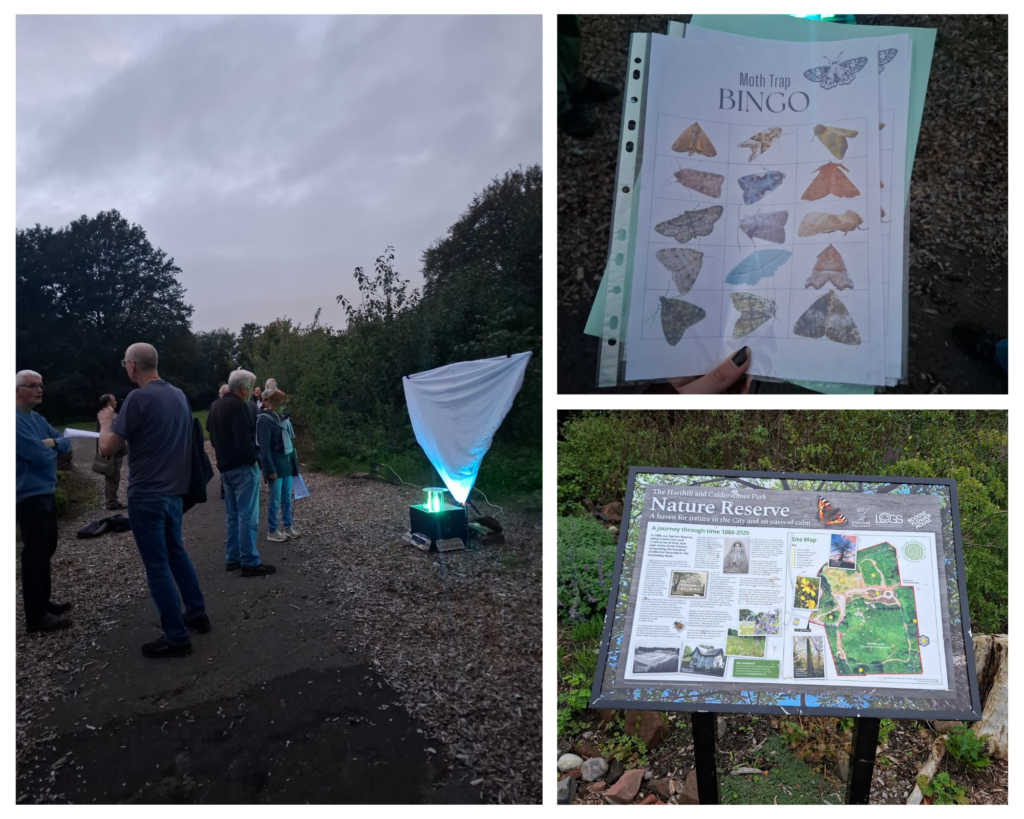
On the cusp of the autumn equinox on the 22nd of September, I reached a personal milestone by facilitating my first-ever event at the reserve. I could not have asked for a more welcoming group of participants. Together, we set up a moth trap and observation sheet, diving into a fascinating discussion about the ecological importance of moths, their incredible diversity, and the vital role that wildlife recording plays in conservation.
The reserve sits at the edge of Calderstones Park and has been brought to life after local people fought to protect the site, which had almost become a development site. I visited earlier in September and was given an informative tour by Stephen Ralph, a very dedicated committee member.
The four-acre site was once entirely concrete, before volunteers began transforming it into a flourishing natural space in 2019.
Since then, they have planted native trees, created a thriving meadow, built a wildlife pond, and so much more.
This site beautifully highlights the power of community, the vital fight to protect our greenspaces, and the incredible, lasting impact we can achieve when we stand together.
The reserve is open on Tuesdays while the volunteers are on-site. I highly recommend visiting to learn more about the group’s incredible work or even getting involved by joining the team as a volunteer.
A big thanks to all the volunteers for giving me the opportunity to host a moth night!
Species Highlights
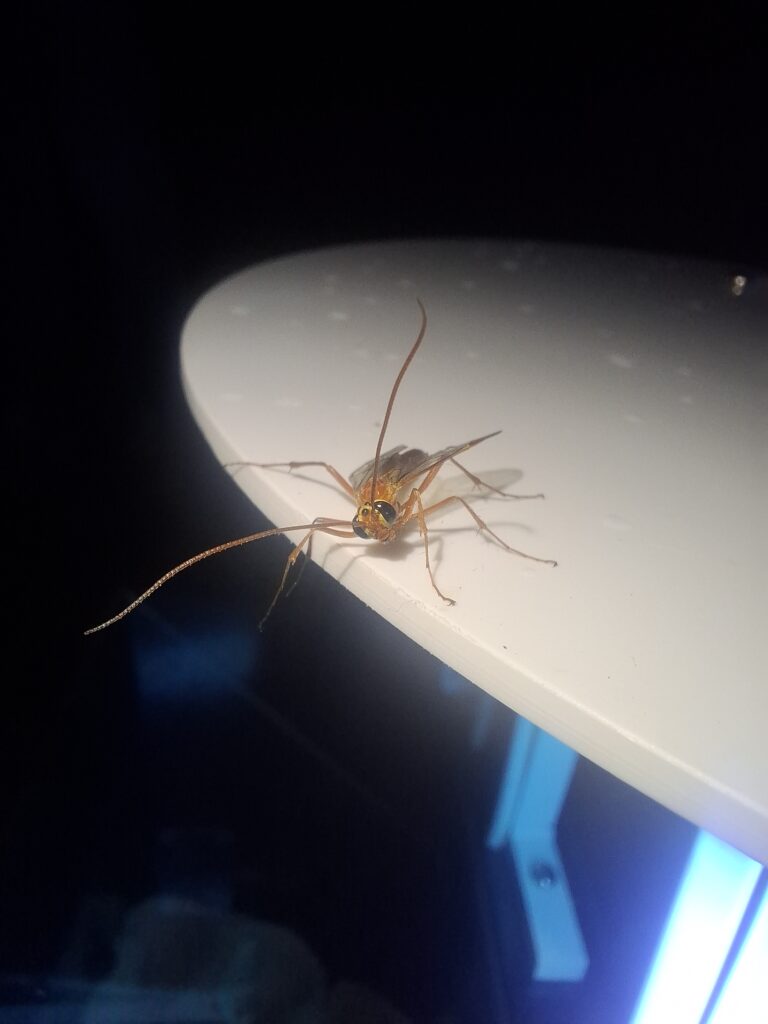
Parasitoid Wasp (still trying to figure out which species)
This interesting fellow really enjoyed the moth-trapping event at Calderstones Nature Reserve. So much so, he basically stole the show.
Parasitoid wasps lay their eggs in or on other insects. Their hosts can include caterpillars, beetles, aphids, and even spiders.
Although this sounds quite gruesome, parasitoid wasps play an essential role in regulating insect populations and are widely used in biological pest control.
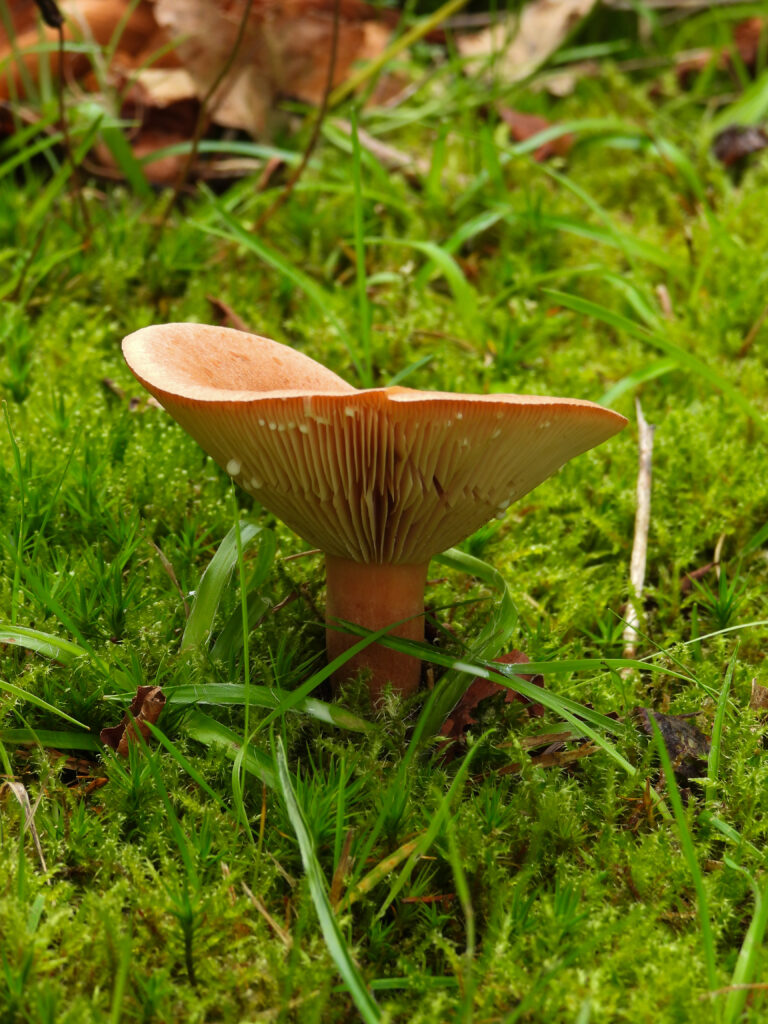
Milkcap (Lactarius spp.) Potentially Rufous Milkcap.
Milkcaps secrete a kind of ‘milk’ or latex from their gills when damaged. Depending on the species, this can be mild, spicy, acrid, or even sweet. The ‘milk’ can be white, orange, or sometimes green.
I have no idea which Milkcap species this is. Many experienced mycologists will taste a tiny amount of the latex as part of the identification process, as its flavour can be a useful characteristic when distinguishing between species.
I’m not yet brave enough to do so.
Thank you for reading until the end! I hope you enjoyed Septembers blog which largely covered one of my favourite natural wonders, fungi. And my thoughts on the often overlooked connection between heritage sites and habitats.
Leave a Reply